Part of: Banknote Authentication
This article is part of the Banknote Authentication hub, covering methods and technologies used to verify genuine banknotes and detect counterfeits.
Banknotes are authenticated through systematic verification processes that determine whether currency is genuine or counterfeit. With billions of banknotes circulating globally and sophisticated counterfeiting technology becoming increasingly accessible, reliable authentication methods are essential for maintaining public confidence in cash-based transactions.
Modern banknotes incorporate multiple layers of security features designed to be verifiable by the public, businesses, and central banks using progressively sophisticated techniques. Understanding these authentication methods can help individuals and organizations protect themselves from fraud while supporting the integrity of the monetary system. The European Central Bank and U.S. Currency Education Program provide official guidance on authentication methods.
Why Banknote Authentication Matters
Counterfeit currency poses serious threats to economic stability, erodes public trust in cash, and causes direct financial losses to individuals and businesses who unknowingly accept fake notes. Central banks invest billions in developing anti-counterfeiting technologies, but these protections only work when people know how to verify authenticity.
European Central Bank reports have indicated that €20 and €50 notes are frequently among the most counterfeited denominations, though patterns vary by period and region. ECB data from 2021 showed counterfeit euro banknotes withdrawn from circulation at low levels compared to historical periods, partly attributed to improved security features and public education efforts.
The «Movie Money» Phenomenon
Recent years have seen an increase in «movie money»—replica banknotes originally created for film production that enter real-world circulation. These notes typically make no attempt to reproduce genuine security features and often bear disclaimers stating they’re not legal tender. Their circulation highlights the critical need for public education about basic authentication checks, as these obvious replicas can succeed when recipients don’t examine notes carefully.
The Three-Level Authentication Framework
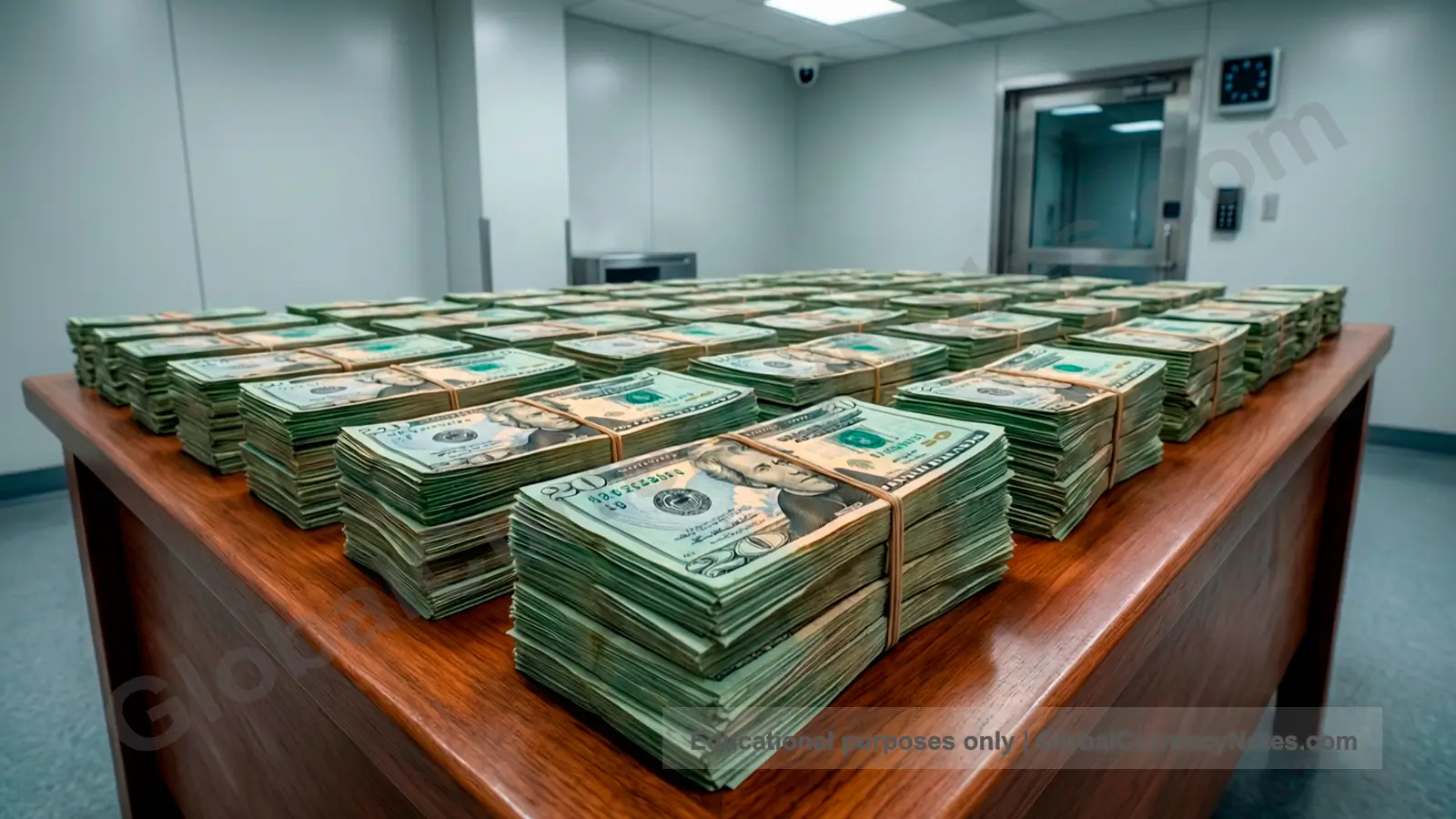
Currency authentication technologies are strategically organized into three levels, each serving different users with varying access to specialized equipment:
Level 1: Public Authentication (No Equipment Required)
These features enable anyone to verify banknotes quickly using only their senses—no tools, training, or technology needed. Central banks design Level 1 features to be intuitive and memorable, following the widely-promoted «Feel-Look-Tilt» method.
Level 2: Semi-Professional Authentication (Simple Tools)
Features accessible with basic equipment like UV lamps, magnifying glasses, or handheld detectors. Retailers, bank tellers, and businesses commonly use Level 2 verification to supplement visual checks, especially for higher-denomination notes or suspicious currency.
Level 3: Central Bank Authentication (Specialized Equipment)
Highly sophisticated features detectable only with advanced technology available exclusively to central banks and specialized cash processing facilities. These covert security elements serve as final arbiters when Level 1 and 2 checks produce ambiguous results.
This tiered approach helps ensure that basic authentication is accessible to everyone while maintaining reserve verification capabilities for expert analysis.
Level 1: The Feel-Look-Tilt Method
The Feel-Look-Tilt framework provides a simple, memorizable sequence for authenticating banknotes without equipment. Research studies have suggested that this three-step process, when performed correctly, can help detect many common counterfeits, though effectiveness varies significantly based on training, experience, and counterfeit sophistication.
Step 1: Feel the Banknote
Authentic banknotes have distinctive tactile properties that counterfeits may struggle to replicate accurately:
- Paper texture: Genuine notes use cotton-fiber banknote paper (not wood pulp), creating a firm, crisp, slightly rough feel. Paper notes make a distinct crisp sound when shaken; counterfeits on standard paper may sound dull or muffled. Polymer notes have a smooth, almost plastic feel that differs markedly from paper or imitation polymer
- Raised printing (intaglio): Often considered a reliable tactile feature. Intaglio printing creates genuinely raised surfaces detectable by running fingers lightly across specific areas—typically the main image, denomination numerals, and text. Many counterfeits feel flat or only simulate texture through embossing, though sophisticated counterfeits may attempt to replicate this feature
- Tactile marks: Many modern currencies include small raised patterns (dots, bars, or textured areas) specifically designed to assist visually impaired users. These marks serve dual purposes: accessibility and authentication
Step 2: Look at the Banknote
Visual inspection reveals features integrated into the note’s structure during manufacturing:
- Watermarks: Held to light, genuine notes display watermark images formed by varying paper thickness during production. Watermarks show clear tonal gradations and three-dimensional depth. Some counterfeit watermarks may be printed on the surface (visible from one side only) or lack realistic depth
- Security threads: Embedded strips running vertically through the note, visible as dark lines in normal light and often displaying text or patterns when held to light. Many threads also fluoresce under UV light. Some counterfeit threads may be printed on rather than embedded in the substrate
- See-through features: Some currencies use precisely registered printing on front and back that, when held to light, combine to form a complete image. This registration alignment can be difficult for counterfeiters to replicate accurately
- Print quality: Genuine banknotes typically exhibit exceptionally sharp, clean printing. Microtext remains legible under magnification; lines stay crisp without breaks or blurring. Some counterfeit notes may show fuzzy edges, broken lines, or smudged microprinting
Step 3: Tilt the Banknote
Changing viewing angles activates optically variable features that are generally very difficult to photocopy or scan with conventional equipment:
- Color-shifting ink: Specially formulated inks that change color dramatically when tilted—for example, shifting from copper to green, or gold to blue. This effect results from optical interference in multilayer pigments and cannot be easily reproduced with conventional printing methods
- Holograms and diffractive elements: Create movement effects, depth illusions, or images that appear and disappear when viewed from different angles. Modern holograms may display multiple distinct images depending on tilt direction
- Optically variable devices (OVDs): Advanced foil patches or windows incorporating multiple optical effects—movement, color change, and hidden images—within a single feature
Research studies have reported that trained individuals using the Feel-Look-Tilt method can achieve high detection rates (some studies suggesting 95% or higher in controlled conditions), though actual accuracy varies significantly based on training, experience, counterfeit sophistication, lighting conditions, and time available for examination. Effectiveness drops substantially when people rely on only one or two checks rather than all three steps.
Level 2: Professional Authentication Methods
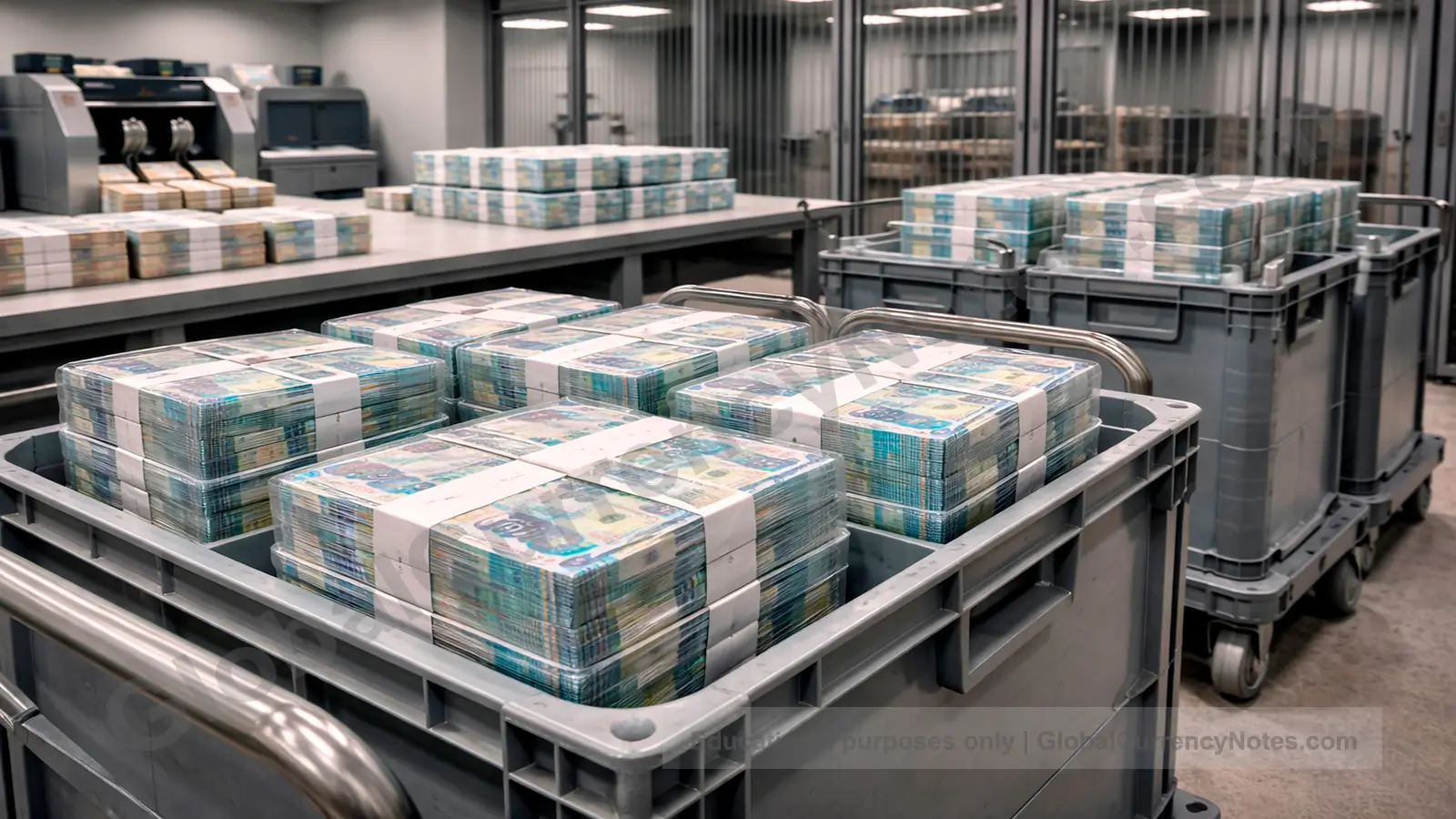
Businesses, financial institutions, and retailers frequently supplement manual checks with equipment that reveals features invisible to the naked eye.
Ultraviolet (UV) Light Detection
Many banknotes incorporate fluorescent fibers, inks, or patterns visible only under UV illumination. Genuine UV features typically glow with specific colors and patterns; counterfeit notes may show no UV response or display incorrect colors due to ordinary paper’s natural fluorescence. UV verification is particularly common at retail checkouts and bank counters, where compact UV lamps provide quick confirmation.
Infrared (IR) Detection
Some security inks become visible or invisible under infrared light. This property allows automated machines and specialized detectors to confirm authenticity by analyzing IR absorption patterns characteristic of genuine banknotes.
Magnetic Detection
Certain inks contain magnetic particles with specific magnetic signatures. Banknote processing machines and validators test these magnetic properties to verify authenticity. Because magnetic inks require specialized formulations, they can be challenging for counterfeiters to replicate accurately.
Magnification
Simple magnifying devices (typically 10x-50x magnification) reveal microtext—extremely small text legible only under magnification. Genuine microtext typically remains sharp and continuous; some counterfeit microtext may appear as broken lines or dots because conventional printers cannot easily achieve the resolution of intaglio printing.
Automated Banknote Validators
Electronic devices used in retail, banking, and vending machine contexts test multiple security features simultaneously. Modern validators can authenticate notes in approximately 0.3 to 0.5 seconds under optimal conditions by analyzing:
- Physical dimensions (length, width, thickness)
- UV fluorescence patterns
- Infrared absorption/reflection
- Magnetic signatures
- Image patterns and printing quality
These devices reject notes failing any authentication criteria, though genuine but heavily worn notes may occasionally trigger false rejections. Device performance depends on equipment quality, calibration, and maintenance.
Level 3: Central Bank Authentication
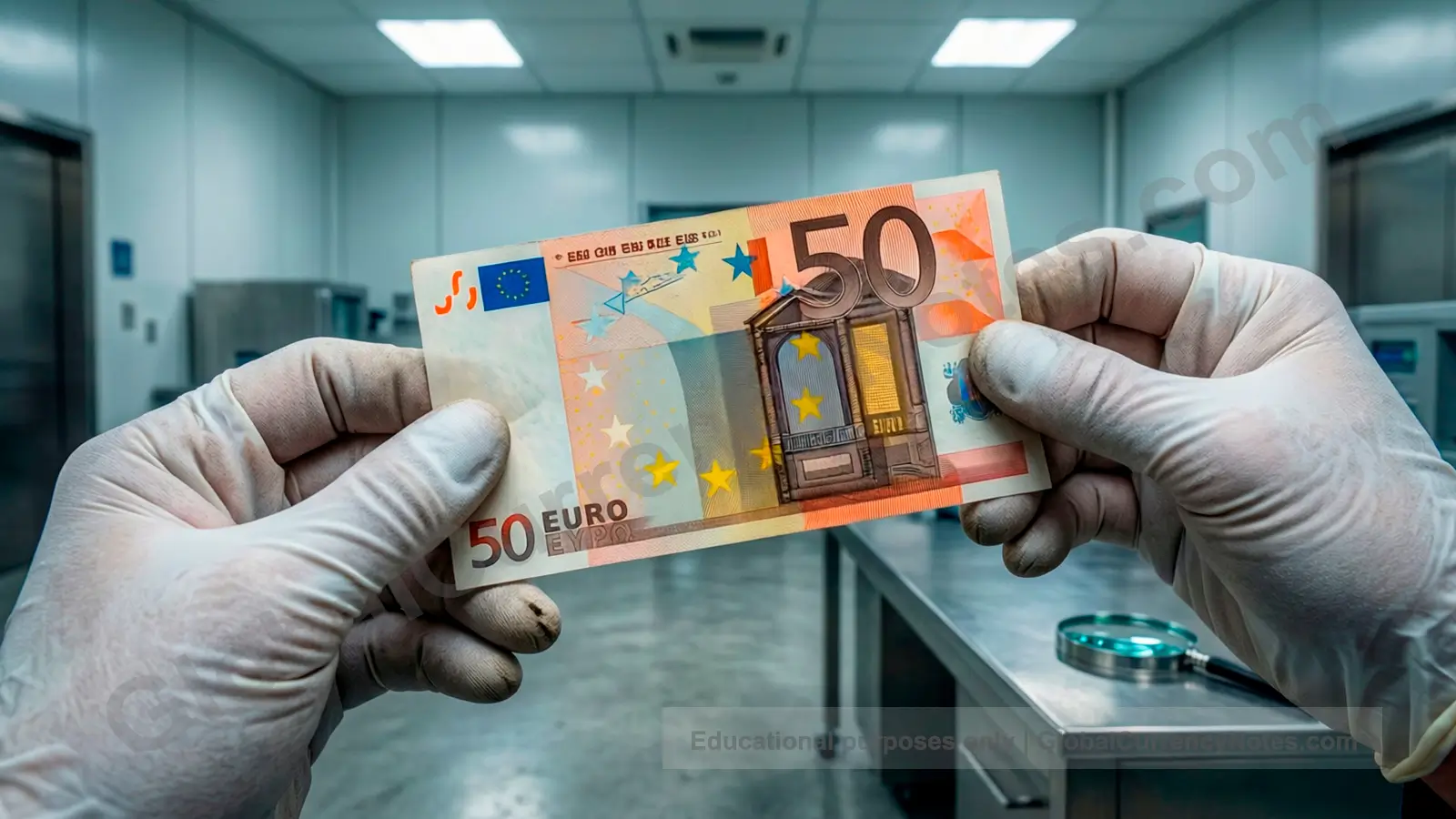
Central banks maintain covert security features detectable only with highly specialized forensic equipment. These features serve as final verification when questioned notes are submitted for expert examination. Level 3 features are deliberately kept confidential to maintain their effectiveness; public disclosure would help counterfeiters develop workarounds.
Examples of Level 3 technologies may include:
- Specific chemical compositions detectable through spectroscopy
- Unique fiber arrangements or taggants visible only with specialized imaging
- Encoded information readable by proprietary central bank equipment
- Microscopic security elements requiring forensic-grade analysis
Emerging Technologies: Smartphone Authentication
Recent advances in mobile technology are enabling new approaches to banknote verification. Some smartphone applications have been developed for banknote authentication using image processing and pattern recognition technologies.
How Smartphone Authentication Works
These applications typically allow users to photograph a banknote with their smartphone camera. The app analyzes the image using algorithms, examining:
- Print quality and pattern accuracy
- Intaglio printing characteristics (visible in high-resolution photography)
- Color accuracy and distribution
- Specific security feature presence and positioning
Developers of these apps have claimed high accuracy rates under optimal conditions, with some reporting verification in under one second. However, actual performance depends heavily on multiple factors including camera quality, lighting conditions, photograph stability, and the specific counterfeit being examined. Current limitations include the need for good lighting, steady photography, and app access to reference databases of legitimate currency designs.
Important: These tools should be considered supplementary to, not replacements for, traditional verification methods, particularly for high-value transactions. As smartphone cameras and processing capabilities improve, mobile authentication may become increasingly reliable, though it will likely remain complementary to established authentication techniques.
Machine Learning and Artificial Intelligence in Authentication
Research into automated authentication using machine learning has demonstrated promising results. Studies using specific datasets (such as the UCI Machine Learning Repository’s banknote authentication dataset derived from images of genuine and counterfeit notes) have reported that algorithms like Support Vector Machines (SVM), Random Forest, and Neural Networks can achieve classification accuracies exceeding 99% in controlled testing conditions.
These systems typically analyze features such as:
- Wavelet-transformed image characteristics
- Statistical properties of banknote regions
- Spectral components and frequency distributions
- Pattern recognition across multiple scales
However, real-world performance may vary significantly based on counterfeit types, image quality, algorithm implementation, and training data quality. As machine learning models improve and training datasets expand, AI-powered authentication is becoming more common in high-volume cash processing environments, though human verification remains essential for ambiguous cases and final determinations.
Important Limitations of Authentication Methods
Critical Notice: No authentication method guarantees 100% accuracy. Sophisticated counterfeits may pass some or all common authentication checks. The information in this article is for educational purposes only and does not constitute professional authentication training or guarantee counterfeit detection.
Key Limitations to Understand
- Accuracy varies significantly: Authentication effectiveness depends heavily on individual skill, experience, training, attention to detail, and examination conditions
- Counterfeit technology evolves: Methods effective today may become less reliable over time as counterfeiting techniques advance
- Worn genuine notes: Heavily circulated authentic banknotes may fail some authentication tests due to wear, fading, or damage
- Environmental factors: Manual authentication accuracy depends on lighting quality, time available for examination, and examiner fatigue
- Equipment limitations: Equipment-based authentication is only as good as the device quality, calibration, and maintenance
- Individual variation: Detection accuracy varies substantially between individuals based on visual acuity, tactile sensitivity, and experience
What to Do If You Suspect a Counterfeit
Important: Do not confront or accuse the person who gave you a suspected counterfeit note. In most jurisdictions, this could create legal complications or personal safety risks. Instead:
- Note any distinguishing characteristics of the person (if safe and practical) without confrontation
- Separate the suspected note from genuine currency
- Report the note to local police or submit it to your central bank for verification according to local procedures
- Understand that most jurisdictions provide no compensation for surrendered counterfeit notes
Authentication practices, legal procedures, and reporting requirements vary significantly by country. Always consult your local central bank and law enforcement for guidance specific to your jurisdiction.
Practical Authentication in Different Contexts
Individual Consumers
For everyday transactions, the Feel-Look-Tilt method can provide reasonable protection when performed correctly. Most individuals need only learn to recognize 2-3 key security features on commonly used denominations in their currency. Verification typically takes just 1-2 seconds with practice.
Retail and Small Business
Businesses handling moderate cash volumes may benefit from combining manual checks with simple UV lamps (Level 2 authentication). Training staff to perform quick but systematic checks on higher-denomination notes can help reduce counterfeit acceptance risk without significantly slowing transactions.
Banking and High-Volume Cash Handling
Financial institutions and cash-in-transit companies typically use automated high-speed validators that test multiple Level 2 features simultaneously. These machines can process thousands of notes per hour while maintaining authentication accuracy. Suspicious notes are flagged for manual expert examination.
Central Banks and Forensic Analysis
When notes are submitted as potentially counterfeit, central bank specialists employ Level 3 authentication alongside comprehensive forensic analysis. This may include microscopy, spectroscopy, chemical testing, and comparison against reference specimens. Final determinations can take days or weeks for particularly sophisticated counterfeits.
Frequently Asked Questions
How long does it take to authenticate a banknote properly?
Using the Feel-Look-Tilt method, individuals with training and practice can examine banknotes in approximately 1-2 seconds. Automated validators typically require approximately 0.3-0.5 seconds under optimal conditions. More detailed manual examination might take 10-30 seconds when inspecting multiple features carefully. Actual time varies based on experience, lighting, and examination thoroughness.
Can high-quality counterfeit banknotes pass basic authentication?
Sophisticated counterfeits may replicate some Level 1 features convincingly, but typically fail when multiple security elements are examined together. The Feel-Look-Tilt method’s strength lies in its multi-feature approach—counterfeits that pass one test often fail another. However, no authentication method guarantees 100% detection accuracy, and counterfeit sophistication varies widely.
Do all countries use the same authentication features?
No. While common principles (watermarks, security threads, optically variable features) appear across many currencies, specific implementations vary widely by country and note series. Effective authentication requires familiarity with your local currency’s particular security features. Consult your central bank for specific guidance on your currency.
Are smartphone authentication apps reliable?
Some smartphone apps using image processing and machine learning can achieve high accuracy rates under optimal conditions (good lighting, steady photography, high-quality cameras). However, performance depends heavily on multiple factors and varies by app, device, and counterfeit type. These apps should be considered supplementary tools rather than replacements for traditional verification methods, particularly for high-value transactions.
What should I do if I receive a suspected counterfeit banknote?
Do not return it to the person who gave it to you or confront them, as this may create legal complications or safety risks. Note distinguishing characteristics if safe and practical (without confrontation), then report the note to local police or submit it to your central bank for verification according to local procedures. Most jurisdictions provide no compensation for surrendered counterfeits. Procedures vary by country—consult local authorities for guidance specific to your jurisdiction.
Why don’t central banks disclose all security features publicly?
Level 3 (covert) features must remain confidential to preserve their effectiveness. If counterfeiters knew exactly what to replicate, they could develop workarounds more easily. The tiered system helps ensure that even if public features are compromised, hidden features provide backup authentication capability for expert analysis.
Can worn or damaged genuine banknotes fail authentication tests?
Yes. Heavily circulated notes may show faded security features, worn intaglio printing, or damaged security threads. While still genuine, they might fail automated validator tests or raise suspicions during manual examination. This is why banks accept worn notes and forward them to central banks for fitness evaluation and replacement.
Disclaimer: Information provided is for educational purposes only and does not constitute professional advice. Banknote standards and regulations vary by jurisdiction and are subject to change. Readers should exercise their own judgment. For full legal disclosures and liability limitations, visit our Legal Notice.