Part of: Banknote Types & Materials
Understanding the institutions authorized to create physical currency and the economic principles behind centralized money issuance.
Who issues banknotes is a fundamental question in modern monetary systems: in nearly every country worldwide, central banks hold exclusive or primary authority to issue physical currency. According to the Bank for International Settlements, this centralized system helps ensure monetary stability, maintain consistent security standards, and allows governments to manage their economies more effectively through controlled money supply.
While many people assume central banks have always controlled money creation, this arrangement is relatively recent in monetary history. The evolution from private bank-issued notes to government-backed monopolies reflects centuries of economic development and lessons learned about financial stability and public confidence in currency systems.
Brief History of Banknote Issuance
The first European bank to issue paper money was Stockholms Banco in Sweden, which began issuing notes in 1661. For the next two centuries, multiple private banks in most countries could issue their own banknotes, often with government permission but with varying levels of oversight and regulation.
This decentralized system created several challenges. Different banks’ notes often traded at different values depending on the issuing institution’s reputation and perceived financial stability. Bank failures sometimes left holders with worthless paper. Counterfeiting became more problematic when hundreds of different note designs circulated simultaneously, making authentication difficult for ordinary people.
The Bank Charter Act of 1844 in England, according to the Bank of England, established one of the first national monopolies on currency issuance, giving the Bank of England exclusive rights to issue new banknotes in England and Wales. Other countries gradually followed this model. By the early 20th century, most developed nations had centralized issuance under a single authority, though the process wasn’t complete globally until after World War II.
Who Issues Banknotes Today
Central Banks: The Standard Model
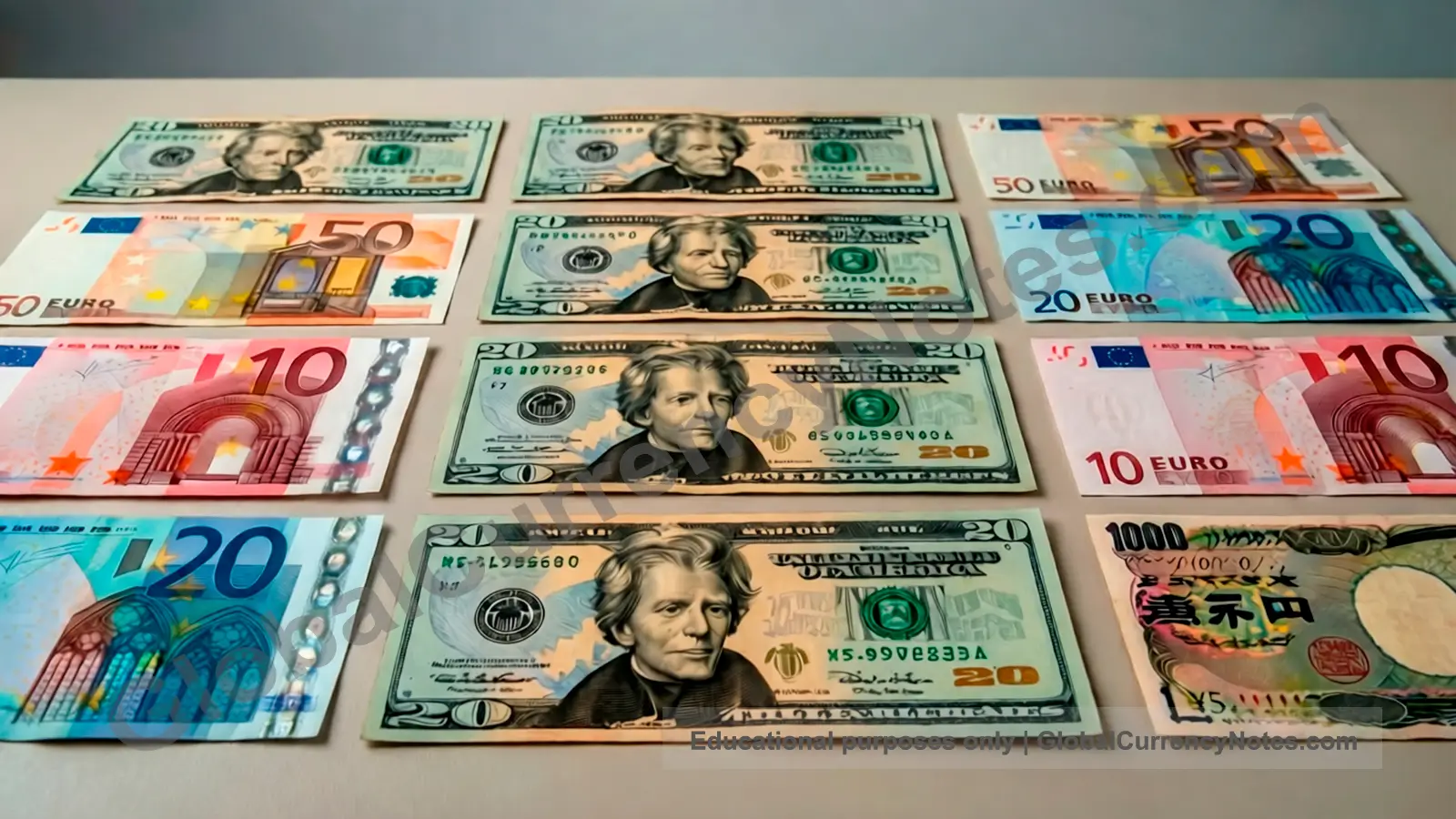
In most countries, the central bank holds exclusive authority to issue banknotes. The Federal Reserve issues US dollars, the European Central Bank produces euros, the Bank of England creates pounds, and the Bank of Japan prints yen. This pattern repeats across nearly 200 jurisdictions worldwide, though specific legal frameworks vary by country.
Central banks typically don’t physically print money themselves in most cases. They contract specialized security printing companies or government mints to manufacture notes according to exact specifications. The central bank maintains complete control over design decisions, security features, quantity produced, and distribution timing, though the actual manufacturing is often outsourced.

Notable Exceptions
Several places maintain systems where multiple commercial banks issue banknotes under central oversight, though these are exceptions rather than the norm:
Hong Kong: Three commercial banks—HSBC, Standard Chartered, and Bank of China—each print their own versions of Hong Kong dollar notes. All three designs carry legal tender status, though the Hong Kong Monetary Authority sets strict requirements each must follow.
Scotland: Bank of Scotland, Royal Bank of Scotland, and Clydesdale Bank issue their own pound sterling notes. These circulate alongside Bank of England notes throughout the UK, though some merchants outside Scotland may be less familiar with them.
Northern Ireland: Bank of Ireland, Danske Bank, and Ulster Bank issue Northern Ireland pounds under Bank of England supervision, similar to the Scottish system.
These exceptions persist primarily due to historical tradition rather than economic necessity. The arrangements function because the issuing banks must hold equivalent reserves with the central monetary authority, preventing overissuance and maintaining monetary stability.
Why Central Banks Issue Banknotes
Monetary Control
Central banks adjust the money supply to help manage inflation, support employment objectives, and work toward economic stability. Direct control over banknote creation allows for more immediate response to changing economic conditions. When more money is needed in circulation, the central bank can authorize additional printing. When excess cash might contribute to inflation, worn notes can be destroyed faster than they’re replaced.
Counterfeit Prevention
A single issuing authority can implement consistent, advanced security features across all denominations. This makes authentication easier for the public and creates higher barriers for potential counterfeiters. When multiple banks issued notes, counterfeiters could potentially exploit weaker designs or create fake notes of less common banks that merchants couldn’t easily verify.
Public Confidence
Government backing helps reassure users that banknotes will be accepted universally and maintain their value. During the era of private banknotes, people sometimes questioned whether specific notes were worth face value. Central bank guarantees help eliminate this uncertainty, which is generally considered essential for cash to function effectively in commerce.
Seigniorage Revenue
Seigniorage refers to the profit earned from creating money. Production costs for banknotes are typically much lower than their face value, creating a gain for the issuing authority. This income typically returns to the government treasury after covering the central bank’s operating costs, though the exact arrangements vary by country and central bank charter.
How Banknote Issuance Works
Design and Security
Central banks typically collaborate with security experts, designers, and printing specialists to create banknote designs that balance usability, security, and cultural representation. Design cycles generally span several years before new series enter production. Advanced features like holograms, color-shifting ink, and polymer substrates are often incorporated to stay ahead of counterfeiting techniques.

Production Authorization
Central banks forecast cash demand based on economic activity, seasonal patterns, and wear rates of existing notes. Orders are typically placed with security printers months in advance. Production runs must meet exact specifications—even minor deviations in color, dimensions, or security features can result in batches being rejected and destroyed, though specific tolerances vary by issuing authority.
Distribution to Commercial Banks
New banknotes generally move from printing facilities to central bank vaults, then to commercial bank branches through secure logistics networks. Commercial banks typically purchase currency from the central bank at face value, deducting the amount from their reserve accounts. When banks return worn notes to the central bank, they generally receive credit equal to the face value of acceptable notes returned.
Key Differences Between Issuance Systems
The centralized model used by most countries offers several advantages in security, consistency, and public confidence. Notes from a single source are generally easier to authenticate and potentially harder to counterfeit than systems with multiple issuers.
The multi-issuer systems in Hong Kong and parts of the UK function smoothly but require additional coordination. Each issuing bank must maintain reserves backing their notes, preventing overissuance but creating operational complexity. These systems persist more from historical tradition than economic necessity.
Regardless of the specific structure, all modern banknote issuance systems share common goals: maintaining public confidence in the currency, preventing counterfeiting, ensuring adequate cash supply, and supporting broader monetary policy objectives.
Frequently Asked Questions
Can private banks issue banknotes today?
In most countries, no—central banks hold exclusive authority to issue banknotes. The exceptions, including Hong Kong, Scotland, and Northern Ireland, operate under strict central bank oversight with requirements that commercial issuers hold full reserves backing their notes. Even in these cases, the arrangements exist under central bank supervision and regulatory frameworks.
Why did countries shift from multiple issuers to central bank monopolies?
Multiple issuers created challenges with inconsistent note quality, varying acceptance rates, counterfeit vulnerability, and bank failures that sometimes left note holders with worthless paper. Centralizing issuance helped solve these issues by creating more uniform, government-backed currency that people could trust more readily. The transition occurred gradually over approximately 150 years in most countries.
Do central banks make money from issuing banknotes?
Yes, through seigniorage—the difference between production cost and face value. Production costs are typically much lower than face value, creating revenue. This income typically goes to the government treasury after covering central bank operating expenses, though specific arrangements vary by country and central bank charter. The exact amounts depend on currency demand and production costs.
Who decides what appears on banknotes?
Central banks generally control design decisions, though government input is common for imagery depicting national symbols, historical figures, or cultural themes. The process typically involves public consultation and takes several years from concept to circulation. Specific decision-making processes vary significantly by country and legal framework.
How do central banks prevent counterfeiting?
Central banks incorporate advanced security features during design and production, continuously update technologies to stay ahead of counterfeiting techniques, control access to specialized materials like security paper and holograms, and work with law enforcement agencies to investigate and prosecute counterfeiters. No system provides complete protection, but layered security features make successful counterfeiting more difficult.
Can central banks create unlimited money?
From a technical perspective, central banks can authorize unlimited banknote production. However, excessive money creation typically causes inflation, undermining the currency’s value and public confidence. Central banks generally balance money supply with economic needs to maintain price stability while supporting economic growth objectives. Legal frameworks and institutional practices typically constrain unlimited money creation.
What happens if a central bank fails?
Central bank failure is extremely rare as these institutions are typically backed by government authority and hold substantial assets. If monetary authority collapsed, the government would likely restructure it or establish a replacement. Historical examples show that loss of monetary discipline can have severe economic consequences, but the institution itself typically persists in some form. Specific outcomes would depend heavily on the country’s legal and political framework.
Disclaimer: Information provided is for educational purposes only and does not constitute professional advice. Banknote standards and regulations vary by jurisdiction and are subject to change. Readers should exercise their own judgment. For full legal disclosures and liability limitations, visit our Legal Notice.