Part of: Banknote Security
Comprehensive guide to Japanese yen banknotes, innovative security features, Series F authentication methods, and Bank of Japan currency specifications.
Japanese yen banknotes represent some of the world’s most technologically advanced currency systems. According to the Bank of Japan, the Series F notes introduced in 2024 incorporate innovative security features including advanced holographic technology and multiple authentication layers designed to make counterfeiting challenging while maintaining practical usability.
With counterfeiting rates that remain among the lowest internationally according to Bank of Japan reporting, the Japanese yen demonstrates how advanced security design can support public confidence while maintaining accessibility for everyday transactions.
This guide explains the security features, authentication methods, and characteristics of Japanese yen banknotes currently in circulation based on publicly available Bank of Japan information.
Series F: The 2024 Redesign
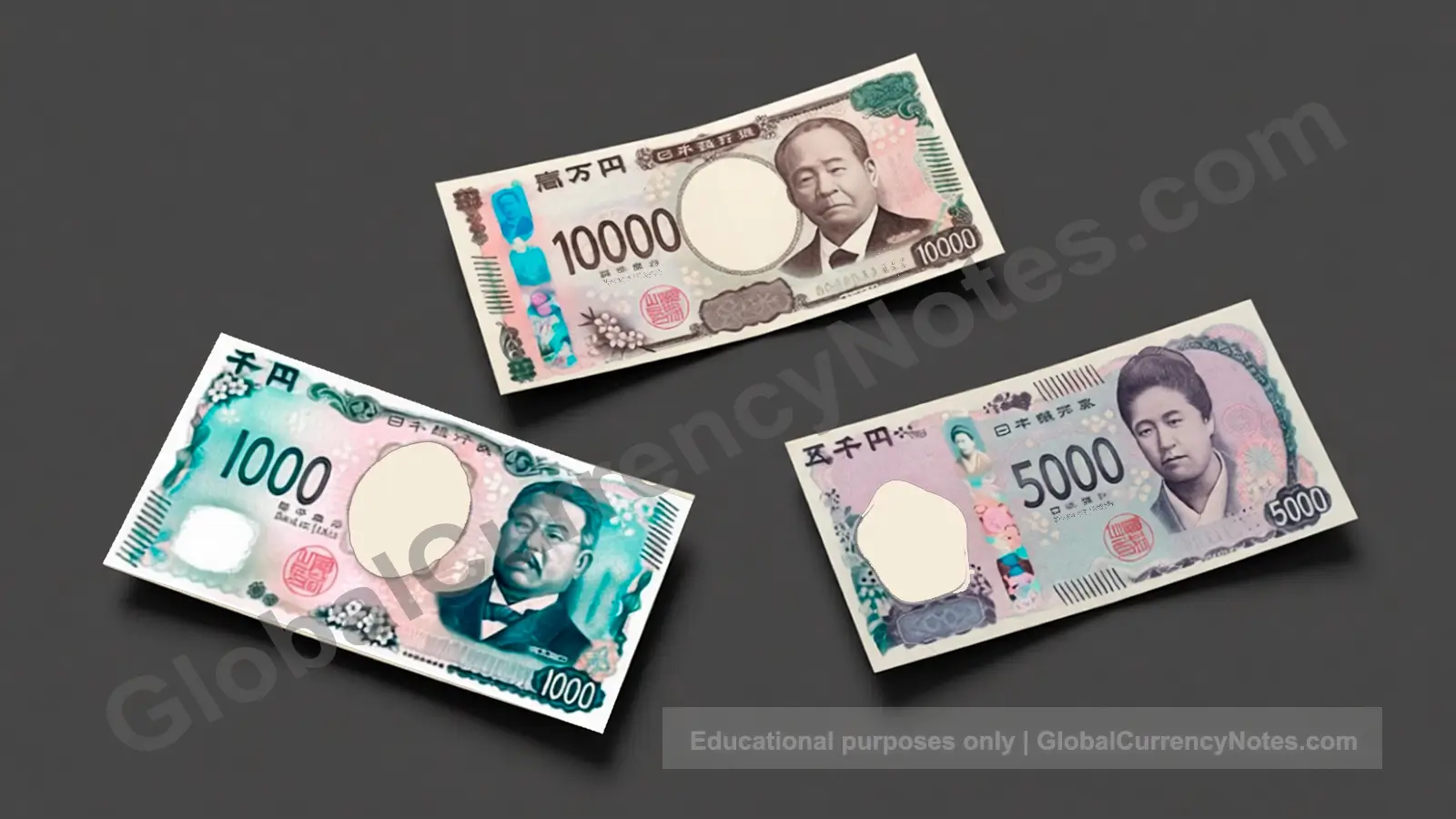
In 2024, the Bank of Japan launched Series F banknotes, representing a significant redesign following the previous series that had circulated since 2004. According to Bank of Japan announcements, these notes incorporate both enhanced security features and improved accessibility elements.
Series F introduces notable design changes including English text stating «Bank of Japan,» aimed at improving international recognition and usability for non-Japanese speakers. Both Series E and Series F notes remain legal tender according to current Bank of Japan policy and circulate together during the transition period.
Current Denominations and Design
The Bank of Japan issues three primary denominations, each featuring prominent Japanese historical figures and cultural symbols.
¥1,000 Note
The ¥1,000 note features Kitasato Shibasaburō, a pioneering bacteriologist who contributed to modern medical science. The reverse displays «The Great Wave off Kanagawa,» one of Japan’s internationally recognized artworks by Hokusai.
This denomination uses predominantly blue-green coloring with security elements including microprinting and watermark features.
¥5,000 Note
Tsuda Umeko, founder of one of Japan’s pioneering women’s educational institutions, appears on the ¥5,000 note. The reverse features wisteria flowers, symbolizing education and cultural advancement.
This note uses purple tones and includes enhanced tactile features designed to assist visually impaired users.
¥10,000 Note
The highest common denomination honors Shibusawa Eiichi, known for significant contributions to Japanese economic development. Tokyo Station’s architecture appears on the reverse, representing modernization and progress.
The ¥10,000 note features brown-red coloring and contains advanced security features.
The ¥2,000 Note
Japan also produces a ¥2,000 note, issued in 2000 to commemorate the millennium and G8 Summit in Okinawa. According to Bank of Japan data, this denomination remains legal tender but circulates infrequently, making it relatively uncommon in daily transactions.
Advanced Security Features
Series F banknotes incorporate security features representing significant technological advancement in currency authentication, according to Bank of Japan documentation.
Advanced Holographic Technology
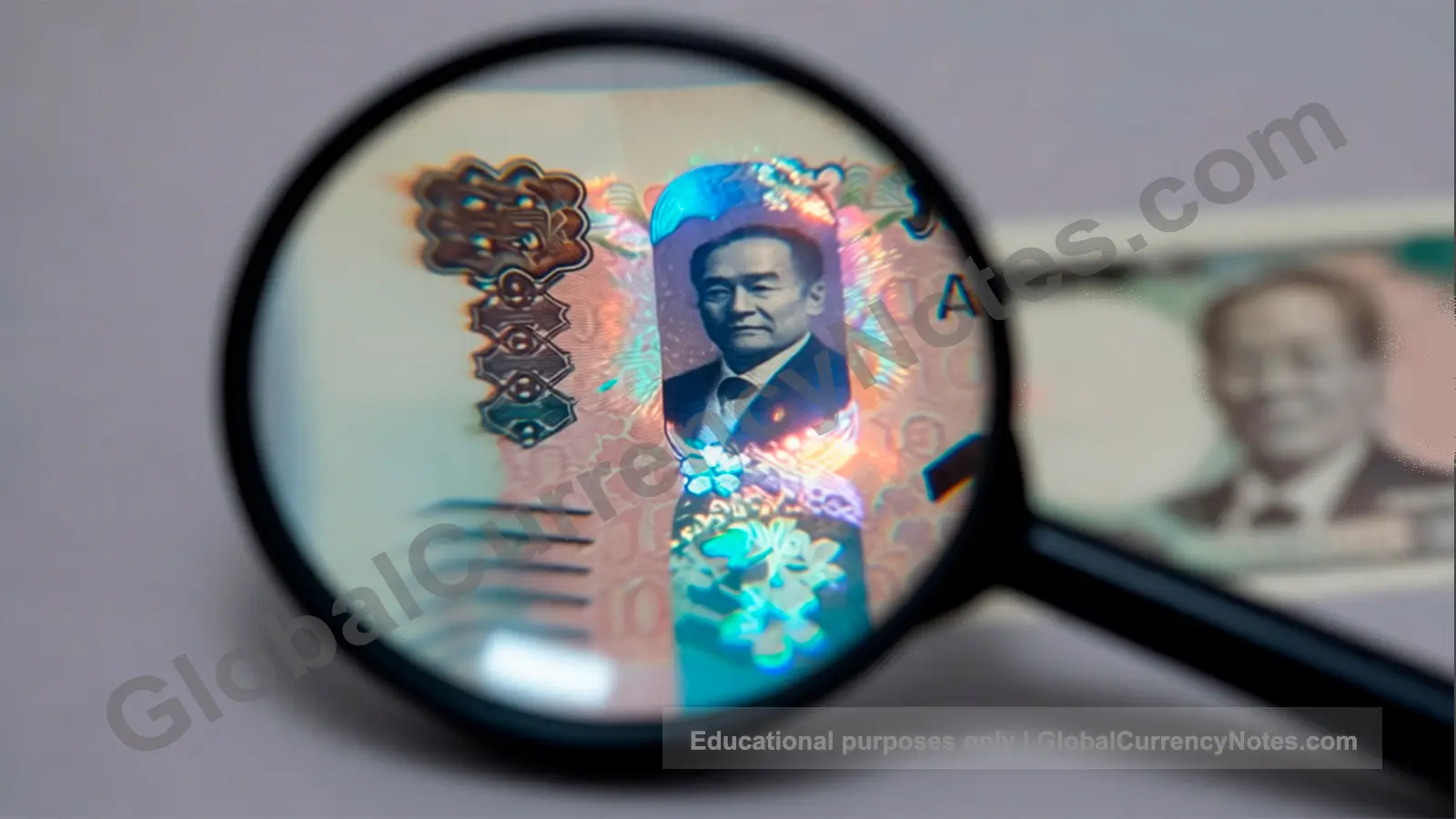
A notable feature is the advanced holographic portrait that appears to change when the note is tilted. This complex optical element surrounds the main portrait with a color-shifting frame visible from multiple viewing angles.
The hologram displays different colors depending on viewing angle and lighting conditions. According to Bank of Japan information, this technology required extensive development and presents significant challenges for reproduction using conventional methods.
Vertical Watermark Bar System
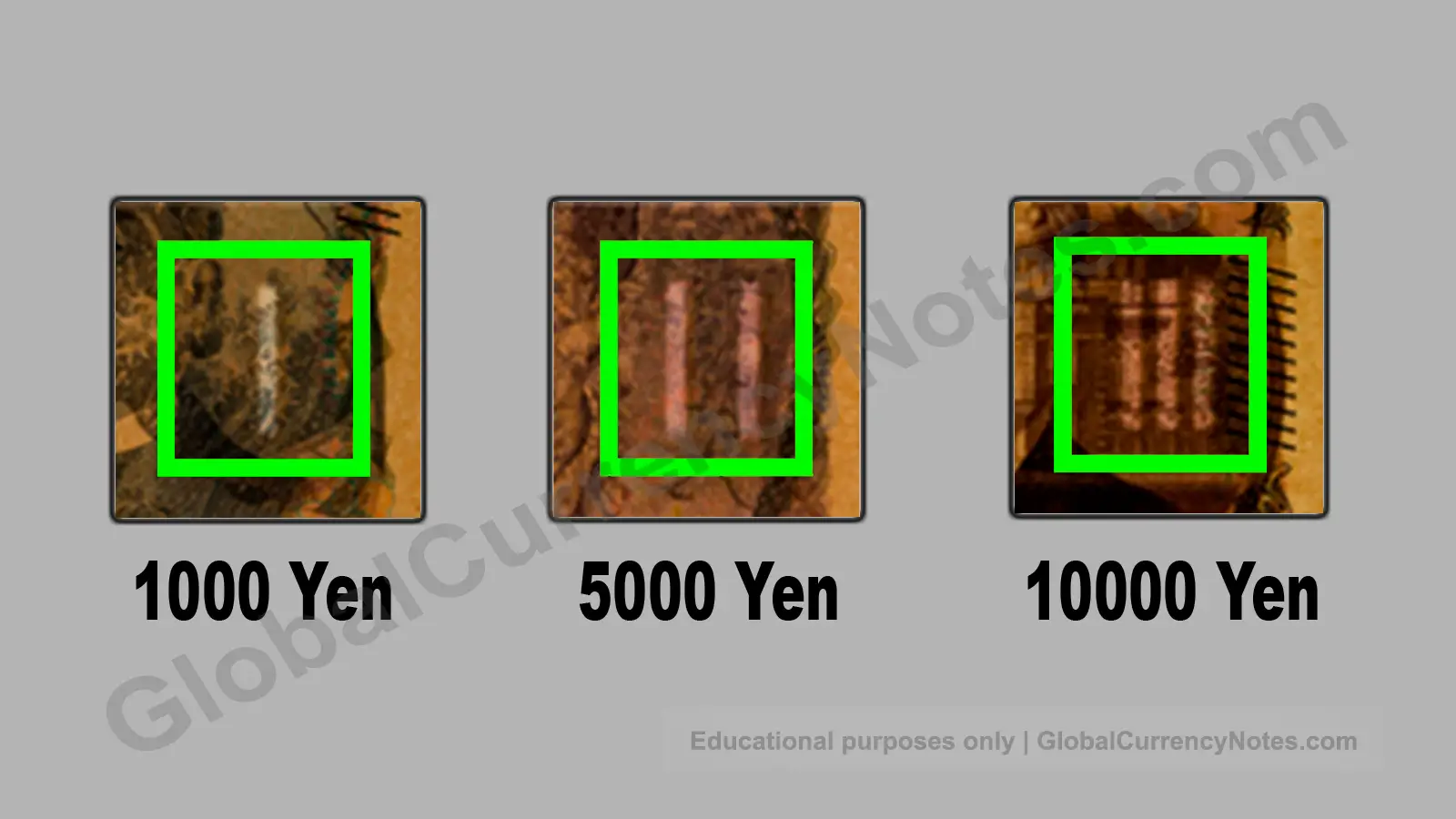
Japanese banknotes use a vertical watermark bar system for denomination identification. The number of bars visible when held to light corresponds to the denomination’s value in thousands of yen.
The ¥1,000 note shows one vertical bar, the ¥5,000 displays two bars, and the ¥10,000 contains three bars. This system allows verification without requiring numerical reading.
High-Definition Watermark Portraits
Each note contains a detailed watermark portrait matching the printed figure. These watermarks are designed to show tonal gradation, visible when held to transmitted light.
Material and Production
Japanese banknotes use specialized paper incorporating mitsumata fiber, derived from the Nepal Himalayan paperbush. According to Bank of Japan information, this material provides characteristic texture and durability while resisting common wear and moisture damage.
Banknote production occurs under contract to the Bank of Japan at specialized security printing facilities. Manufacturing follows strict security protocols using specialized equipment.
Pearl ink creates an iridescent effect on specific design elements. This ink shifts appearance subtly under different lighting, providing an additional visual authentication layer.
Universal Design Features
Series F notes incorporate extensive accessibility features designed to assist visually impaired users in identifying denominations.
Tactile Identification Marks
Each denomination contains raised marks in different positions. The ¥1,000 note has marks on the left side, the ¥5,000 in the center, and the ¥10,000 on the right side. These marks are designed to enable identification by touch.
Large Arabic Numerals
Unlike previous series that emphasized Japanese characters, Series F features prominent Arabic numerals. These larger, high-contrast numbers are intended to improve readability for elderly users and international visitors.
Color Differentiation
Strong color contrast between denominations—blue-green for ¥1,000, purple for ¥5,000, and brown-red for ¥10,000—provides visual recognition intended to assist those with various levels of color perception.
Counterfeit Statistics and Security Effectiveness
According to Bank of Japan reporting, Japanese yen counterfeiting rates remain very low relative to total circulation volumes. The Bank publishes periodic statistics indicating that detected counterfeit incidents represent a very small fraction of legitimate notes in circulation.
Bank of Japan data suggests that advanced security features contribute to maintaining low counterfeiting rates. However, specific counterfeit detection numbers vary by reporting period and methodology.
The introduction of Series F with enhanced security features is intended to provide continued protection against counterfeiting activities. The advanced holographic and watermark systems are designed to create significant technical and economic barriers to reproduction.
Authentication Methods
The Bank of Japan recommends several verification techniques accessible without special equipment.
Observe the Holographic Portrait
Tilt the note slowly while watching the holographic portrait. Genuine notes display color transitions and apparent changes in the portrait frame. The quality and smoothness of these transitions help distinguish genuine notes from potential counterfeits, though multiple features should be checked together.
Check Watermark Bars Against Light
Hold the note to any light source and count the vertical watermark bars. One bar indicates ¥1,000, two bars mean ¥5,000, and three bars confirm ¥10,000. Bars should appear clearly defined.
Feel the Tactile Marks
Run your finger across the designated tactile mark area. Genuine notes display raised printing that feels noticeably different from the surrounding paper surface.
Examine Microprinting
Under magnification, Japanese yen contains very fine text printed in lines that appear solid to the unaided eye. This microprinting should remain sharp and legible under magnification, while counterfeits may show blurring or broken characters.
Circulation and Lifespan
The Bank of Japan maintains substantial volumes of circulating banknotes across denominations. The ¥10,000 note represents significant volume by value, while the ¥1,000 note circulates frequently by quantity.
Average circulation life varies by denomination based on usage patterns. According to Bank of Japan information, notes used frequently in retail transactions typically require replacement sooner than higher denominations used less often. Actual lifespan depends on many factors including handling conditions and usage frequency.
When notes become worn beyond quality standards, financial institutions return them to the Bank of Japan for destruction and replacement. This continuous renewal helps maintain circulation quality.
International Usage and Recognition
The Japanese yen ranks as one of the world’s major reserve currencies. While domestic circulation represents primary usage, yen banknotes are recognized at currency exchanges internationally.
The addition of English text on Series F notes is intended to improve international usability. Currency verification systems can potentially process Japanese banknotes more efficiently with bilingual identification.
However, heavily worn or damaged yen notes may face reduced acceptance at international exchanges. The Bank of Japan’s exchange system allows domestic replacement, but international travelers should carry notes in good condition for optimal acceptance.
Storage and Handling Recommendations
Japanese banknotes resist moisture better than many currencies according to Bank of Japan information, due to their specialized paper composition. However, prolonged exposure to water, chemicals, or extreme heat may damage security features or cause discoloration.
Consider storing notes flat in wallets or organizers to help prevent permanent creasing. While the paper substrate resists many types of damage, sharp folds may weaken the material over time and potentially affect embedded security elements.
Avoid exposing notes to direct sunlight for extended periods. UV radiation can potentially fade printed colors and reduce the visibility of certain security features designed for light-based verification.
Japanese Security Standards and Innovation
Japan’s approach to banknote security demonstrates how advanced technology and thoughtful design can create currency that serves both practical commerce and long-term economic stability.
Low counterfeit rates reflect not only technical sophistication but also effective public education programs. When citizens understand currency verification methods, counterfeiters face both technical and practical barriers.
By introducing innovative features, Japan contributes to advancing global currency security standards. Other nations observe these technological developments and may consider adoption, contributing to an international ecosystem of increasingly secure currency systems.
Frequently Asked Questions
Are old Japanese yen notes still valid?
According to current Bank of Japan policy, both Series E (circulated 2004-2024) and Series F (introduced 2024) notes remain legal tender. The Bank of Japan does not set expiration dates for valid banknotes under current policy, allowing different series to co-circulate. However, policies may change, so verify current status with the Bank of Japan for definitive information.
What makes the ¥2,000 note uncommon?
The ¥2,000 note was issued in limited quantities for the 2000 millennium celebration and Okinawa G8 Summit. According to Bank of Japan data, it never gained widespread circulation acceptance, as the denomination value positioned it between the more commonly used ¥1,000 and ¥5,000 notes. It remains legal tender but circulates infrequently.
How can I identify a fake yen note?
Check multiple features: tilt the note to observe the holographic portrait’s color changes, hold it to light to count watermark bars (1, 2, or 3 depending on denomination), and feel for raised tactile marks. Genuine notes display all these features clearly, though no single feature provides certainty without examining multiple elements together. When in doubt, seek verification through financial institutions.
Why are Japanese banknotes all the same height?
According to Bank of Japan design documentation, uniform height allows all denominations to fit standard ATMs, vending machines, and cash registers. Width varies to provide size-based identification while maintaining equipment compatibility across the payment infrastructure.
Can I exchange damaged yen notes?
The Bank of Japan operates procedures for damaged currency assessment. Damaged notes can be submitted for evaluation, and exchange value depends on remaining identifiable features and the extent of damage. Specific criteria, procedures, and reimbursement rates should be verified directly with the Bank of Japan, as these may vary by damage type and circumstances.
What is mitsumata paper?
Mitsumata is fiber derived from the Nepal Himalayan paperbush, blended with other materials to create specialized banknote paper. According to Bank of Japan information, it provides characteristic texture, durability, and resistance to wear. The specific composition and processing methods are part of secure production protocols.
Do Japanese banknotes contain RFID chips?
According to publicly available Bank of Japan information, Japanese yen banknotes do not contain RFID chips or electronic tracking elements. All security features are optical, tactile, or material-based rather than electronic. However, specific security elements not publicly disclosed may exist for authentication purposes.
Disclaimer: Information provided is for educational purposes only and does not constitute professional advice. Banknote standards and regulations vary by jurisdiction and are subject to change. Readers should exercise their own judgment. For full legal disclosures and liability limitations, visit our Legal Notice.