Part of: Banknote Authentication
Understanding automated verification technologies used across retail, banking, and central bank operations.
Banknote authentication machines are specialized devices designed to automatically verify the authenticity of currency while simultaneously counting, sorting, or dispensing cash. These machines are widely used across retail businesses, commercial banks, ATMs, and central bank facilities to help detect counterfeit notes before they enter or continue circulating in the economy.
Modern authentication systems can typically process between 600 and 2,000 banknotes per minute, depending on the machine category and manufacturer specifications. According to the European Central Bank, professional-grade machines generally achieve high detection rates when properly calibrated and maintained, though no system provides absolute certainty against all counterfeit types.
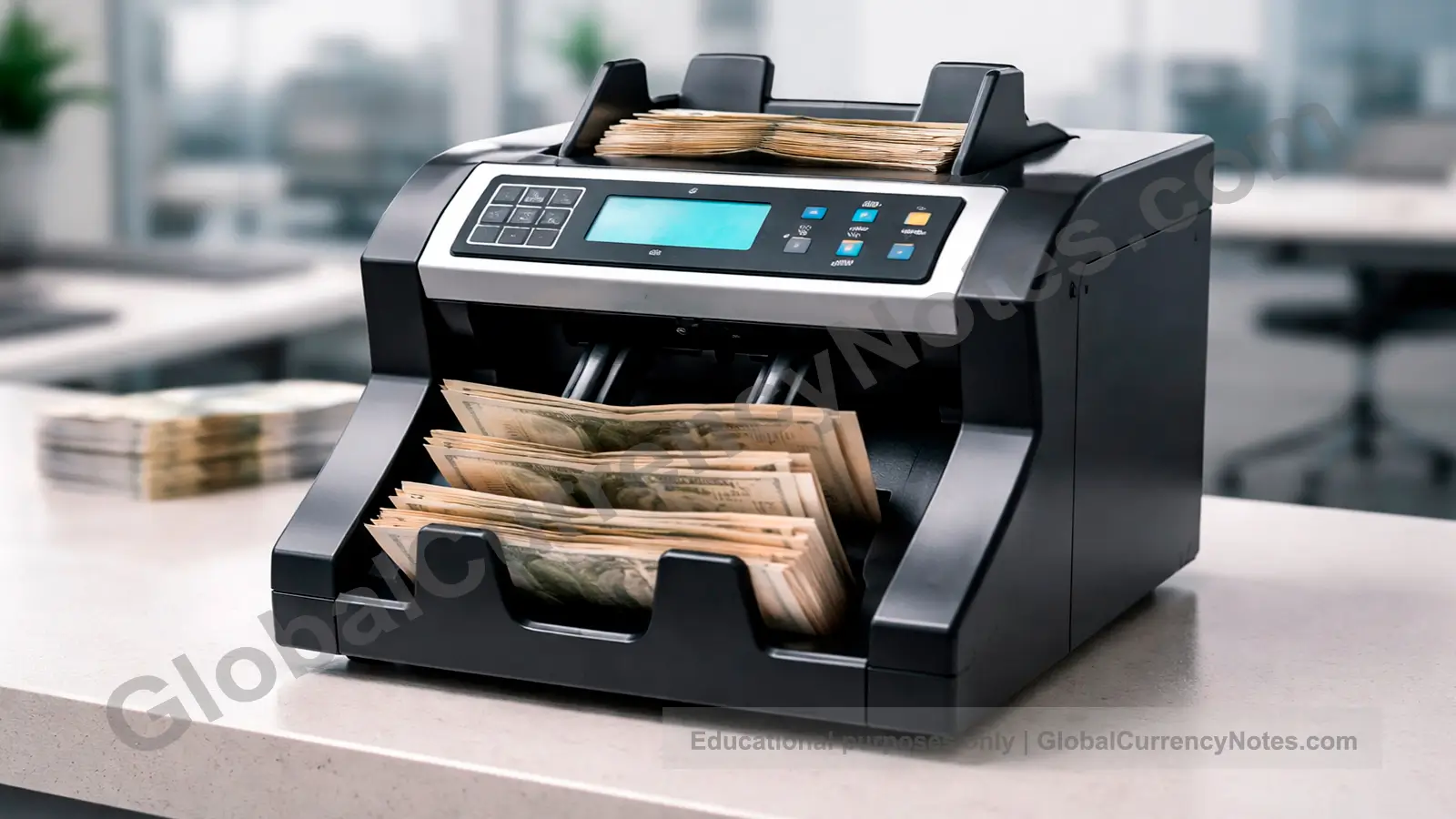
Three Main Categories of Authentication Equipment
Authentication machines are generally classified into three categories based on processing speed, detection capabilities, and intended commercial use.
Retail and Small Business Machines
Desktop counting machines commonly used in retail stores, restaurants, and small businesses typically process 600 to 1,000 banknotes per minute. These compact devices usually focus on basic authentication methods such as ultraviolet (UV) light detection and magnetic ink verification. Retail-grade machines generally cost between $200 and $800 depending on features and manufacturer.
These machines are designed for ease of use with minimal training requirements, making them suitable for cashier operations and daily cash reconciliation tasks. However, they may not detect all sophisticated counterfeit types that professional equipment can identify.
Banking and Commercial Machines
Mid-range machines used by commercial banks and cash-in-transit companies typically process 800 to 1,400 banknotes per minute with more advanced authentication capabilities. These systems generally combine UV, infrared (IR), magnetic, and dimensional detection technologies to improve accuracy rates.
Commercial banking machines can often sort mixed denominations, assess note fitness levels (wear and tear), and integrate with cash management software systems. Price points for these machines typically range from $3,000 to $15,000 depending on features and processing speed.
Central Bank and High-Security Systems
High-speed processing systems used by central banks and large-scale cash centers can handle 1,600 to 2,000+ banknotes per minute. Some advanced models process even faster, though actual throughput depends on authentication requirements and note condition.
These systems typically use advanced image analysis, multi-wavelength optical sensors, and pattern recognition algorithms to detect sophisticated counterfeits. They can also verify serial numbers, assess fitness for recirculation, and in some cases automatically destroy notes deemed unfit for continued use. These professional systems typically cost $50,000 to over $100,000.
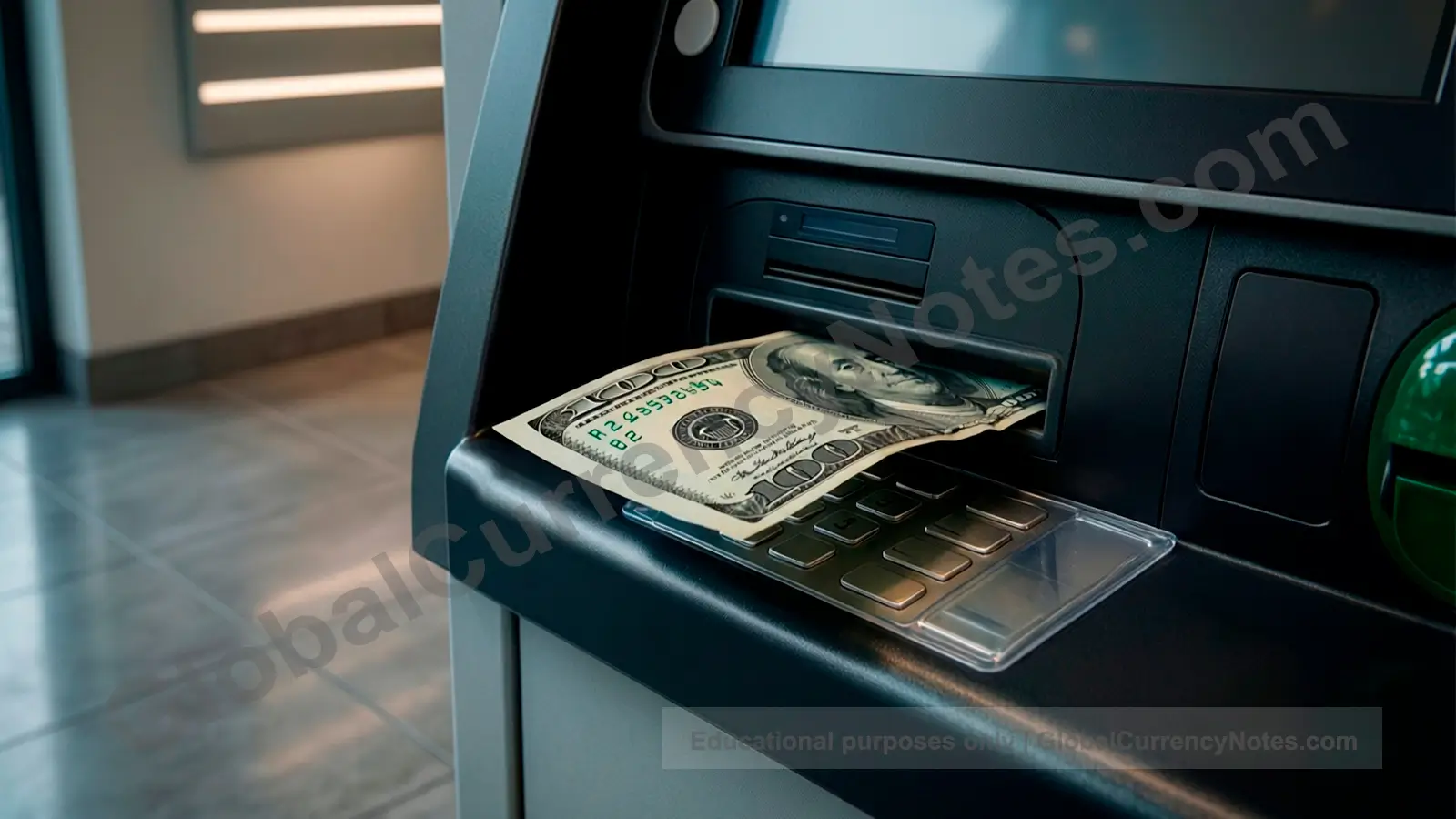
Five Core Detection Technologies
Authentication machines typically employ multiple detection methods simultaneously to verify different security features embedded in genuine currency. The specific technologies and their effectiveness can vary by manufacturer and model.
Ultraviolet (UV) Detection
UV sensors illuminate banknotes with ultraviolet light (typically at 254nm or 365nm wavelengths) to detect fluorescent security features. Genuine banknotes from major issuers are designed to either show specific UV-reactive patterns or remain non-fluorescent under UV light, while counterfeit notes often fluoresce incorrectly due to optical brighteners present in common commercial paper.
Infrared (IR) Detection
Infrared sensors detect special inks that either absorb or reflect IR light at specific wavelengths, typically in the 850-950nm range. According to the Federal Reserve, IR-reactive inks are among the more difficult security features for counterfeiters to replicate accurately.
Magnetic Detection
Magnetic sensors identify the presence and pattern of magnetic inks used in serial numbers, security threads, and other design elements. Genuine banknotes use precisely formulated magnetic inks that produce consistent magnetic signatures when scanned by properly calibrated sensors.
Size and Thickness Measurement
Optical and mechanical sensors measure the physical dimensions and paper thickness of each note. Genuine banknotes are printed on specialized cotton-linen or polymer substrates with precise thickness specifications, typically ranging from 0.10 to 0.11mm for traditional paper notes, though this varies by currency and series.
Image Analysis and Pattern Recognition
High-resolution cameras capture detailed images of banknotes and use pattern recognition algorithms to verify design elements, microprinting, and other visual security features. More advanced systems may employ machine learning models trained on databases of genuine and counterfeit samples, though the effectiveness of these systems depends on training data quality and regular updates.
How ATMs Authenticate Banknotes
Automated Teller Machines (ATMs) contain integrated authentication modules designed to verify banknotes during both deposit and withdrawal operations. When accepting deposits, most modern ATMs use a combination of UV, magnetic, and image sensors to evaluate notes and typically reject suspect currency immediately.
For cash dispensing, many modern ATMs employ what’s sometimes called a «dual-check» system: notes are authenticated when loaded into the machine’s cassettes by cash replenishment services, then verified again during the withdrawal transaction. This approach aims to ensure that only genuine currency reaches customers, though no system can guarantee 100% detection of all counterfeit types.
The Bank of England maintains testing frameworks for ATM manufacturers, requiring machines to meet minimum authentication standards before deployment. Similar certification programs exist in the United States, European Union, and other major currency zones, though specific requirements vary by jurisdiction.
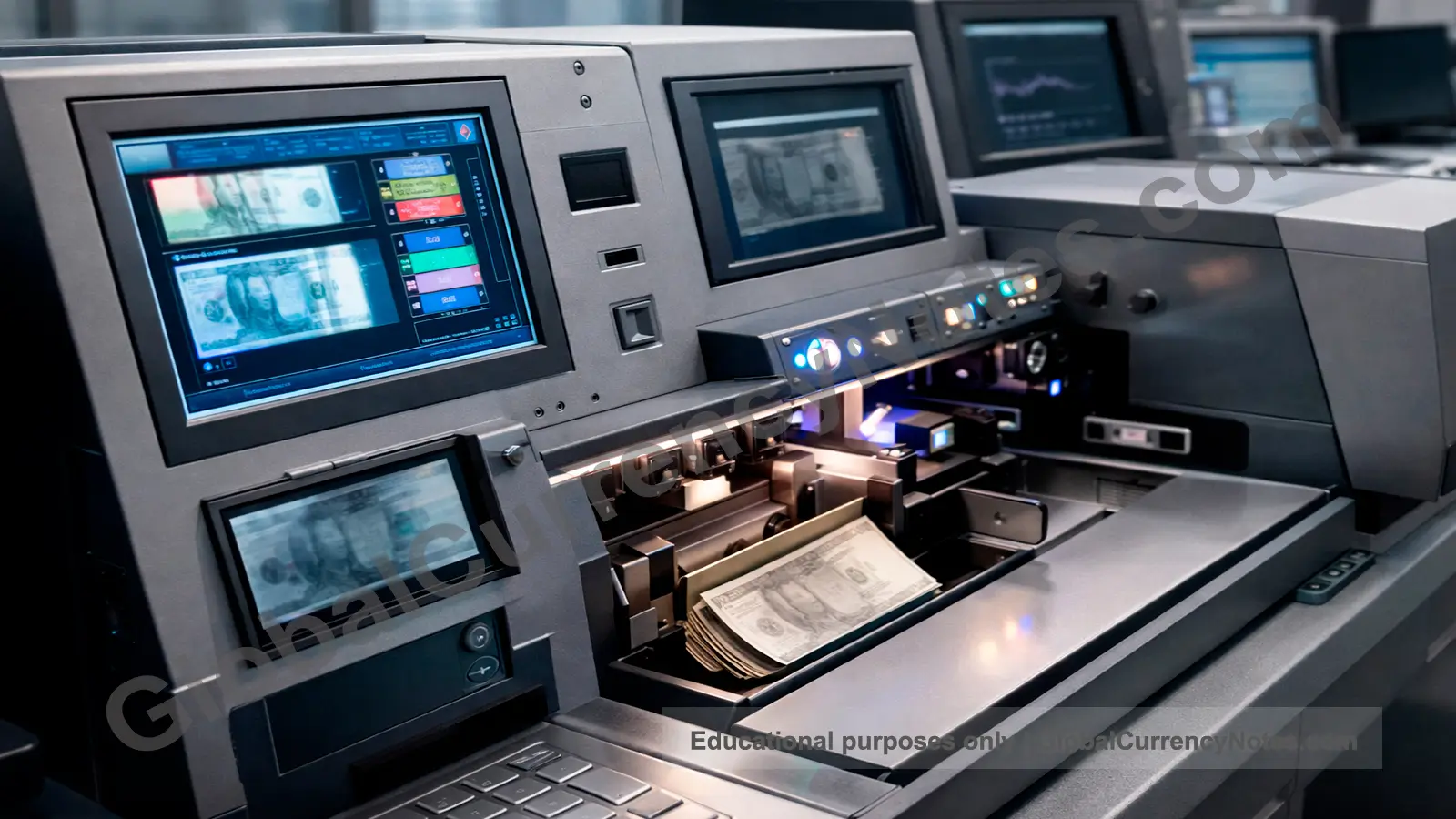
Professional Verification Equipment
Forensic authentication equipment used by central banks, law enforcement agencies, and currency experts provides more detailed verification capabilities than standard commercial machines. These systems can analyze banknotes at microscopic levels, examining features that may not be visible to standard authentication devices.
Professional equipment may include spectral analysis tools that examine the light absorption and reflection characteristics of inks and substrates across multiple wavelengths. Some advanced systems use techniques like X-ray fluorescence to analyze the elemental composition of security inks, though such equipment is typically limited to laboratory and forensic settings due to cost and operational requirements.
The European Central Bank requires that authentication machines used for euro recirculation meet strict testing standards, including the ability to detect test counterfeits that replicate a significant portion of genuine security features. However, testing standards and specific requirements are updated periodically as counterfeit techniques evolve.
Accuracy and Error Rates
Authentication accuracy varies considerably by machine type, price point, calibration status, and the sophistication of counterfeits being detected. Basic retail machines may achieve 95-97% detection rates against common counterfeits, while professional banking systems typically report higher accuracy when properly maintained, though manufacturer claims should be verified through independent testing where available.
False rejection rates—instances where genuine notes are incorrectly flagged as counterfeit—generally remain low for well-calibrated machines, typically below 0.1% according to manufacturer specifications. However, heavily worn, damaged, or contaminated genuine notes may trigger false rejections more frequently, and individual machine performance can vary.
Highly sophisticated counterfeits occasionally bypass mid-range detection systems, which is why high-value cash operations often employ multiple verification methods and manual inspection procedures for suspect notes. No automated system can guarantee detection of all possible counterfeit types.
Regulatory Requirements and Testing Standards
Many developed countries have established requirements for machines used in currency recirculation, though specific standards vary by jurisdiction. The Bank of England publishes and regularly updates lists of approved machines and software versions that meet their authentication requirements for pound sterling.
In the European Union, ECB Decision 2010/14 mandates that machines used to authenticate euro banknotes for recirculation must be tested against standardized counterfeit samples. Manufacturers typically must submit machines for certification before commercial deployment in euro-zone markets.
The Federal Reserve in the United States works with equipment manufacturers through its Cash Product Office to help ensure that ATMs and processing equipment can detect current counterfeit threats. Testing protocols are generally updated when new banknote series enter circulation or when new counterfeit techniques emerge.
Common Applications and Use Cases
Authentication machines serve different purposes across various industries, with requirements varying by operational context:
Retail and hospitality: Daily cash counting and basic counterfeit detection at point-of-sale locations. In these settings, speed and ease of use are often prioritized over maximum detection accuracy.
Commercial banking: Branch-level authentication for customer deposits and ATM replenishment operations. These machines typically must handle mixed denominations and varying note conditions.
Casinos and gaming: High-volume authentication in cash cage operations where counterfeit acceptance can result in significant financial losses. Some large casinos may process millions of dollars in cash daily.
Cash-in-transit companies: Sorting and authentication of currency collected from retail locations before deposit at banking facilities. These operations typically require both processing speed and reliable detection capabilities.
Central banks: Processing returned currency to remove unfit notes from circulation and verify authenticity before reissue. Large central bank facilities may process millions of banknotes daily, though exact volumes vary by country and denomination.
Maintenance and Calibration
Authentication machines generally require regular maintenance to maintain optimal performance. UV lamps typically need replacement every 3,000-5,000 operating hours according to manufacturer guidelines, while sensors should be cleaned regularly in high-volume environments—often weekly or monthly depending on usage intensity.
Software updates are particularly important when new banknote series or security features are introduced. Manufacturers typically release firmware updates that should be installed to ensure machines can properly authenticate redesigned currency, though update availability and timing vary by manufacturer and model.
Professional operators generally recommend annual calibration by certified technicians, particularly for commercial banking and high-volume machines. This helps ensure sensors remain within manufacturer tolerance specifications and can detect emerging counterfeit techniques, though specific maintenance schedules should follow manufacturer recommendations.
Frequently Asked Questions
Can authentication machines make mistakes?
Yes, all authentication machines have limitations. Basic machines may miss sophisticated counterfeits or incorrectly reject worn genuine notes. Even professional systems with high accuracy rates are not infallible, which is why high-value operations often combine automated detection with manual inspection procedures for suspect notes.
Do all ATMs authenticate deposited banknotes?
Most modern ATMs include some form of deposit authentication, but capabilities vary significantly by machine age, type, and manufacturer. Cash-recycling ATMs (which reuse deposited funds for withdrawals) typically have more robust authentication than deposit-only machines. Some older ATM models may accept deposits without immediate verification. If uncertain, consult your financial institution.
How often do banks update their authentication machines?
Update frequency varies by institution and jurisdiction. Banks typically update machine software when new banknote designs are introduced, which occurs every 7-10 years for many major currencies. Hardware replacement cycles generally range from 5-8 years as sensor technology advances and maintenance costs increase, though actual schedules depend on operational requirements and budget constraints.
Can I use a UV flashlight instead of an authentication machine?
UV flashlights can detect fluorescent features but miss magnetic, infrared, and physical characteristics that multi-sensor machines check simultaneously. While UV lights can serve as a quick preliminary check, they provide significantly lower verification confidence than professional authentication equipment and should not be relied upon exclusively for high-value transactions.
What happens to banknotes rejected by machines?
Procedures vary by institution and jurisdiction. Rejected notes are typically separated for manual inspection by trained staff. If confirmed as counterfeit through additional testing, they must generally be reported to law enforcement or central bank authorities according to local regulations. Worn genuine notes may be returned to circulation or sent to central banks for replacement, depending on condition and local policies.
Are authentication machines required by law?
Requirements vary significantly by country, jurisdiction, and industry. The European Union mandates authentication machines for euro recirculation under ECB regulations. Many jurisdictions require ATMs to use certified equipment, though specific standards differ. Retail businesses typically have voluntary compliance, though some localities may have specific requirements. Always consult local regulations and legal counsel for your specific situation.
How much do professional authentication machines typically cost?
Costs vary widely by capability and manufacturer. Retail machines generally range from $200-$800, commercial banking machines typically cost $3,000-$15,000, and high-speed central bank systems can exceed $100,000. These figures typically include hardware and initial software, but ongoing costs such as maintenance contracts, consumables, software updates, and staff training should also be considered in total cost of ownership.
Disclaimer: Information provided is for educational purposes only and does not constitute professional advice. Banknote standards and regulations vary by jurisdiction and are subject to change. Readers should exercise their own judgment. For full legal disclosures and liability limitations, visit our Legal Notice.