Part of: Banknote Security
Banknote security features are sophisticated technologies that make counterfeiting increasingly difficult and expensive. These multilayered protection systems maintain public confidence in money, protect currency integrity, and help authorities detect fake notes. Understanding these features reveals why contemporary banknotes represent some of the most secure documents in everyday circulation.
This guide explains the security technologies found on most modern currencies, how they work, and why they effectively deter counterfeiting. According to the European Central Bank, effective security features combine visible public checks with hidden machine-readable elements. While specific implementations vary by country and denomination, the underlying principles remain consistent across major currencies worldwide. The US Bureau of Engraving and Printing provides detailed information about US currency security features.
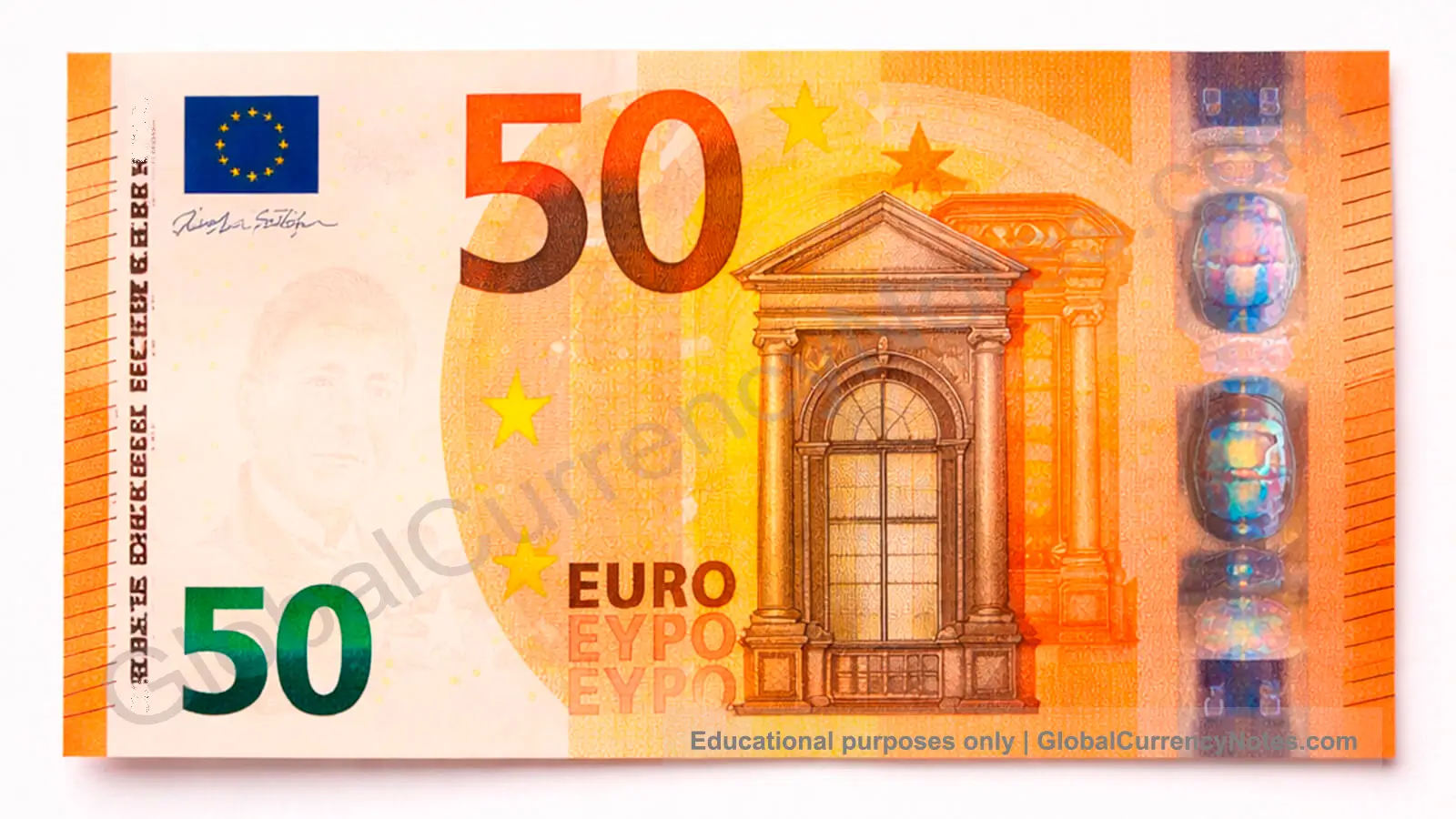
The Three-Level Security Architecture
Security experts and central banks typically classify banknote protection into three levels, each serving different verification needs:
Level 1: Public Authentication Features
These features can be checked by anyone without equipment—using only sight, touch, and tilt. They form the first line of defense and enable everyday users to verify authenticity. Level 1 features include watermarks, color-shifting inks, raised printing, and basic holograms.
Level 2: Semi-Professional Features
These require simple tools like UV lamps or magnifying glasses. Banks, retailers, and currency handlers typically use Level 2 verification. Features include ultraviolet-reactive elements, infrared patterns, and detailed microprinting.
Level 3: Covert Machine-Readable Features
Reserved for central banks, law enforcement, and specialized equipment, these hidden features are not publicly documented. They include specific magnetic patterns, chemical markers, and other proprietary technologies that authentication machines can detect but counterfeiters cannot easily reverse-engineer.
This layered approach ensures that even if counterfeiters replicate some features, detection remains possible through other layers.
Core Security Technologies Explained
Watermarks: Embedded Authentication
Watermarks are tonal images created during paper production by varying paper thickness and density. When light passes through the note, thinner areas appear lighter and thicker areas darker, creating a visible portrait or design.
How they work: During manufacturing, a shaped screen called a dandy roll presses against wet paper pulp, creating density variations. This happens before the paper dries, making the watermark an integral part of the substrate rather than a printed element.
Why they’re secure: Counterfeiters cannot easily add authentic watermarks to finished paper using conventional methods. Attempts to print watermark-like images on surfaces are generally detectable—genuine watermarks show tonal graduation and appear identical from both sides, while printed imitations typically do not.
Examples: US dollar bills feature portraits matching the main printed image. Euro notes include architectural watermarks plus denomination numbers. British pounds incorporate portraits of historical figures.
Security Threads: Woven Protection
Security threads are thin strips—typically polyester or metallic—embedded within the banknote substrate. Modern threads often include microprinted text, optically variable features, or fluorescent elements.
How they work: During paper production, threads are woven into the substrate or positioned between paper layers in windowed configurations where the thread alternately appears on the surface and disappears into the paper.
Why they’re secure: The thread’s position within the paper structure—not merely on top—makes replication extremely difficult with standard methods. Advanced threads incorporate multiple technologies simultaneously: microprinting, color-shifting patterns, and UV-reactive inks.
Examples: US $20 bills feature a security thread left of center that glows green under UV light and shows «USA TWENTY» microprinting. Euro notes use windowed threads with denomination numbers and the word «EURO» in tiny print.
Color-Shifting Inks: Optical Variable Technology
Color-shifting inks—technically called optically variable inks (OVI)—contain special pigments that reflect different wavelengths of light depending on viewing angle, creating an apparent color change.
How they work: These inks contain microscopic multilayer flakes that interfere with light waves. As you tilt the note, different light wavelengths are reflected, causing visible color shifts—commonly from copper to green, or gold to green.
Why they’re secure: The specific optical properties of these inks are patented and tightly controlled. Standard printing processes cannot replicate the effect convincingly with current widely available technology. Even attempts using holographic foils fail under close inspection.
Examples: US $100 bills feature a bell in the inkwell that shifts from copper to green. Euro notes use color-shifting numbers. The British £20 polymer note includes a foil with color-changing elements.
Intaglio Printing: Tactile Security
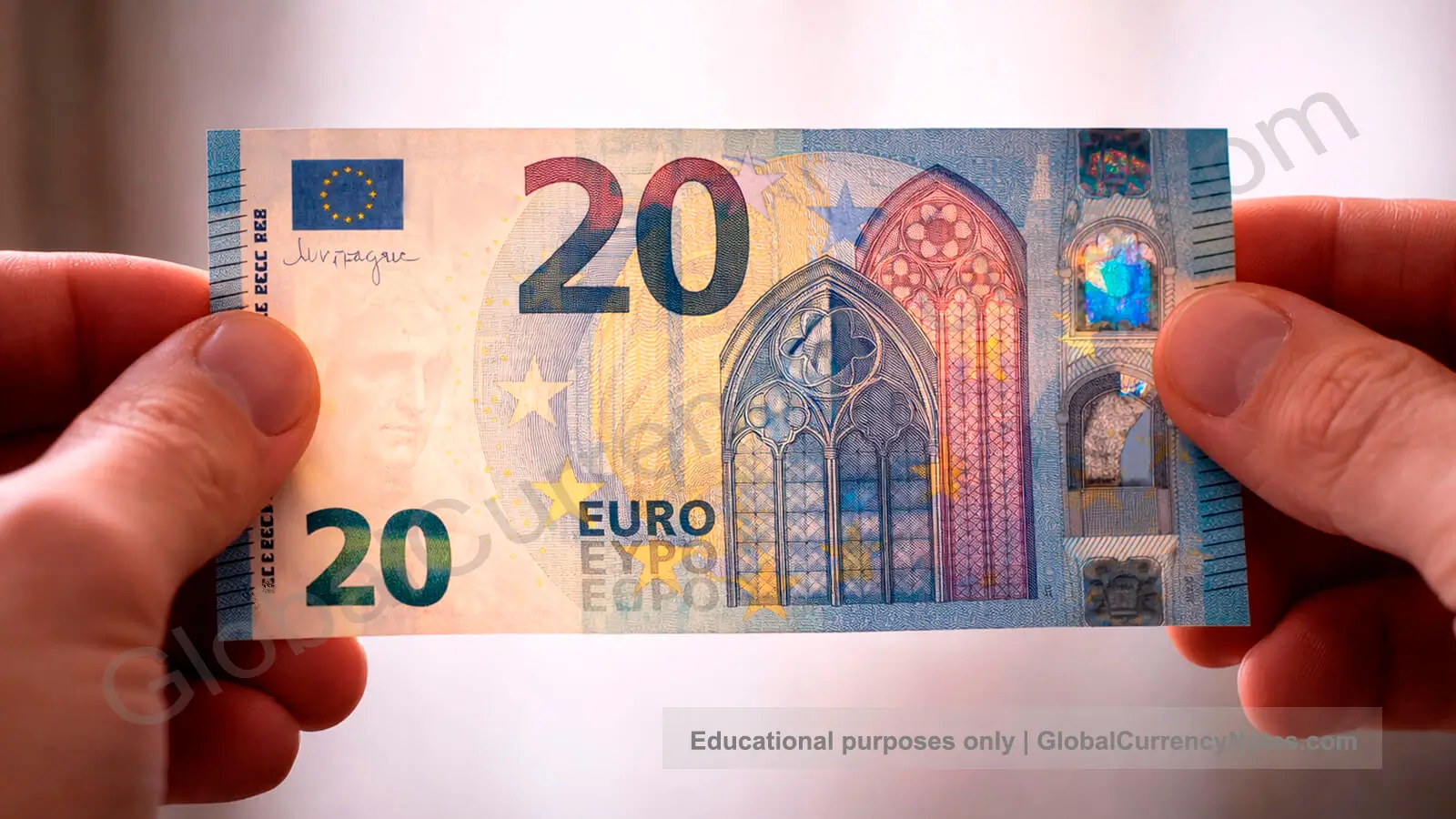
Intaglio is a specialized printing technique that creates raised ink deposits detectable by touch. It produces the distinctive texture of genuine banknotes and sharp, detailed images.
How it works: Images are engraved into metal plates. Ink fills these recessed areas, then heavy pressure transfers the ink to paper, leaving raised deposits. This requires equipment and expertise beyond standard printing capabilities.
Why it’s secure: The raised texture is extremely difficult to replicate convincingly with offset printing or digital methods using current widely available technology. The combination of fine detail and tactile quality creates a security feature that’s both easy to check and difficult to counterfeit.
Examples: US dollar portraits show raised texture, particularly noticeable on clothing and hair details. Euro notes feature raised print on the main architectural images and large denomination numbers.
Holograms and Holographic Foils
Holographic elements use diffraction patterns to create three-dimensional images that appear to move or change when the note is tilted.
How they work: Microscopic surface structures diffract light, creating interference patterns that produce holographic effects. Modern holograms incorporate multiple images, text, and patterns visible at different angles.
Why they’re secure: Creating holographic originating masters requires specialized laser equipment and expertise. The multi-dimensional nature of holograms—with different images appearing at different angles—is very difficult to replicate convincingly through standard photography or printing methods.
Examples: The British £10 polymer note features a holographic foil portrait. Euro notes include holographic stripes showing denomination numbers and architectural symbols. Many Asian currencies use holographic patches on higher denominations.
Microprinting: Microscopic Text
Microprinting consists of text as small as 0.1mm high—appearing as solid lines to the naked eye but becoming readable under magnification of 10x or greater.
How it works: Specialized high-resolution printing techniques create text far smaller than standard printers can produce. The text typically repeats currency names, denominations, or other identifying information.
Why it’s secure: Standard photocopiers and consumer printers generally lack the resolution to reproduce microprinting accurately. Counterfeit attempts typically produce blurred lines or dot patterns instead of clear text.
Examples: US dollars include «THE UNITED STATES OF AMERICA» microprinted in various locations. Euro notes feature tiny «EURO» text around stars. The Swiss franc shows exceptionally fine microprinting throughout the note design.
Polymer-Specific Security Features
Banknotes printed on polymer substrates—thin plastic sheets—can incorporate security features impossible or impractical on paper:
Transparent Windows
Clear sections through the note that may contain printed elements, holograms, or other optical features visible from both sides. These windows are integral to the substrate and cannot be easily replicated on paper notes.
Shadow Images
Designs visible through transparent windows that appear differently from each side of the note, often showing complementary images that align when backlit.
Enhanced Durability
While not strictly a security feature, polymer’s resistance to water, dirt, and tearing means security features remain intact longer, reducing opportunities for counterfeiters to exploit worn notes.
Examples: British polymer notes feature complex transparent windows with holographic elements. Canadian dollars incorporate multiple window features with metallic designs. Australian notes—the first full polymer series—showcase advanced window technologies.

Advanced and Emerging Technologies
Ultraviolet (UV) Reactive Elements
Special inks, fibers, or printed patterns invisible under normal light but glowing specific colors under UV illumination. Different features may fluoresce in different colors—helping authenticate genuine notes and identify denominations.
Infrared (IR) Features
Patterns visible only to infrared sensors. Some printed areas absorb infrared while others reflect it, creating patterns detectable by authentication machines but invisible to the human eye.
Magnetic Features
Certain inks contain magnetic particles in specific patterns. Specialized readers detect these magnetic signatures, providing machine-readable authentication.
Iridescent Elements
Inks or substrates that show color shifts based on illumination angle, similar to color-shifting inks but using different optical principles.
How Security Features Work Together
No single feature provides complete protection against all counterfeiting attempts. Modern banknotes combine multiple technologies that complement each other:
- Visible + Hidden: Public features (holograms, watermarks) deter casual counterfeiting, while covert features (IR, magnetic) catch sophisticated attempts
- Simple + Complex: Basic checks (feel, look, tilt) work for everyday users, while advanced verification serves professionals
- Static + Dynamic: Fixed features (watermarks) combine with viewing-angle-dependent features (color-shifting inks) for layered security
- Substrate + Surface: Embedded features (threads, watermarks) work with printed features (microprinting, holograms)
This redundancy means that even if counterfeiters successfully replicate some features, others will typically reveal the forgery.
Why These Features Effectively Deter Counterfeiting
The economics of counterfeiting determine its prevalence. Effective security features work by making counterfeiting:
- Technically difficult: Requiring specialized equipment and expertise
- Expensive: Driving costs close to or above the face value of notes
- Time-consuming: Slowing production and increasing detection risks
- Easily detectable: Ensuring fakes are caught before causing significant damage
Central banks continuously research and deploy new technologies, staying ahead of counterfeiting techniques. As counterfeiters develop methods to defeat one generation of security, new features enter circulation.
Checking Security Features: Practical Guidance
For everyday verification, focus on Level 1 features anyone can check:
- Feel the texture: Genuine notes have distinctive paper or polymer feel with raised printing
- Hold to light: Check watermarks and security threads—they should be embedded, not printed
- Tilt the note: Observe color-shifting inks and holographic features changing appearance
- Examine details: Look at print quality, especially fine lines and microprinting
Check multiple features rather than relying on one. Sophisticated counterfeits may replicate some elements but rarely fool all checks. For comprehensive authentication, particularly for high-value transactions, consider professional verification services.
Variations Across Currencies
While the technologies described appear on most modern banknotes, specific implementations vary:
- By country: Each issuing authority selects different feature combinations based on counterfeiting threats, production capabilities, and costs
- By denomination: Higher-value notes typically receive more security features than lower denominations
- By series: New note designs add technologies unavailable in older series
- By substrate: Paper and polymer notes use different feature sets suited to each material
Before verifying a specific currency, familiarize yourself with that currency’s particular security features through official central bank resources.
Frequently Asked Questions
Can security features wear out or fade over time?
Some features remain permanent while others may degrade with heavy circulation. Watermarks and security threads stay intact because they are part of the substrate structure. Surface features like holograms can show wear, and printed elements may fade, though genuine notes typically maintain enough recognizable characteristics even when worn. Heavily damaged notes can usually be exchanged at banks according to local policies.
Do all denominations of a currency have the same security features?
No. Higher denominations typically incorporate more and more sophisticated security features because they present more attractive targets for counterfeiting. Lower denominations may have fewer features to reduce production costs while still maintaining adequate security. Central banks balance security needs against production economics for each denomination.
How do central banks decide which security features to use?
Central banks consider several factors: current counterfeiting threats, available technology, production costs, public usability, and compatibility with cash-handling equipment. They typically work with security printing companies, research institutions, and law enforcement to select appropriate feature combinations. The decision process can take several years before new note series enter circulation.
Are older banknote series without modern security features still valid?
Generally yes, though policies vary by country. Older series typically remain legal tender until officially withdrawn, even if they lack contemporary security features. However, some older designs may not be accepted by automated machines or may receive extra scrutiny from retailers. Central banks typically announce withdrawal schedules well in advance and provide exchange periods.
Can UV lights or other simple devices reliably detect counterfeits?
UV lamps help verify specific features but should not be the only verification method. Genuine notes include UV-reactive elements, but sophisticated counterfeits may attempt to replicate these. Using UV light as part of comprehensive checking—combined with visual and tactile inspection—provides better authentication than any single method alone.
Why don’t all countries use polymer banknotes if they’re more secure?
Polymer offers advantages including durability and certain security features, but paper notes continue to evolve with new technologies. Factors in material choice include production costs, environmental considerations, existing infrastructure, public acceptance, and climate conditions. Some countries adopt hybrid approaches, using polymer for certain denominations and paper for others.
How often do security features get updated?
Major currencies have historically introduced new note designs approximately every 7-10 years on average, though this varies considerably by country, economic conditions, and counterfeiting threats. The process involves extensive research, design, testing, and production preparation. Some currencies implement incremental updates to existing series rather than complete redesigns. Central banks balance the need for updated security against the costs and disruption of changing currency designs.
Disclaimer: Information provided is for educational purposes only and does not constitute professional advice. Banknote standards and regulations vary by jurisdiction and are subject to change. Readers should exercise their own judgment. For full legal disclosures and liability limitations, visit our Legal Notice.