Part of: Banknote Circulation & Handling
This article is part of the Banknote Circulation & Handling hub, covering how banknotes are used, stored, worn out, and withdrawn from circulation.
Banknotes are withdrawn from circulation daily as central banks around the world remove millions of worn, damaged, or outdated notes, replacing them with new currency to maintain quality and public confidence in cash. This continuous withdrawal and replacement process is essential to the cash cycle, ensuring that only fit currency remains in everyday use.
Understanding how banknotes are withdrawn reveals the sophisticated systems central banks use to manage currency quality, the technical processes involved in note destruction, and what happens to damaged money that citizens attempt to redeem. The Federal Reserve and Bank of Canada operate extensive withdrawal and replacement systems.

Two Types of Banknote Withdrawal
Central banks withdraw banknotes from circulation for fundamentally different reasons, each following distinct procedures and timelines.
Routine Withdrawal: Removing Unfit Notes
The most common form of withdrawal happens continuously as part of regular cash management. When banknotes become too worn, soiled, or damaged for reliable use, they are classified as «unfit» and permanently removed from circulation. This process occurs daily at Federal Reserve Banks in the United States and equivalent institutions worldwide.
According to Federal Reserve public reports, approximately one-third of all banknotes deposited by commercial banks are determined to be unfit and destroyed, though this proportion varies by denomination and time period. Federal Reserve data indicates that in the United States, more than 70% of new currency printed each year is typically used to replace worn-out notes rather than to expand the money supply, though exact percentages fluctuate based on economic conditions.
Series Withdrawal: Replacing Outdated Designs
Central banks periodically introduce new banknote series with updated security features, revised designs, or improved materials. When this occurs, older series are gradually withdrawn from circulation, even if individual notes remain in acceptable physical condition.
For example, when the Eastern Caribbean Central Bank introduced polymer banknotes in 2020, it announced that paper banknotes would be withdrawn over a minimum five-year period. Similarly, when the United States updates security features (as with the redesigned $100 note in 2013), pre-redesign notes remain legal tender but are removed when they return to Federal Reserve Banks.
Who Manages the Withdrawal Process
Banknote withdrawal involves coordinated action by multiple institutions within a country’s financial infrastructure.
Central Banks: Ultimate Authority
Central banks hold exclusive authority to determine withdrawal policies, fitness standards, and destruction procedures. They establish the technical criteria that classify notes as fit or unfit, manage the logistics of note replacement, and oversee secure destruction processes.
Commercial Banks and Cash Centers
Commercial banks and cash-in-transit (CIT) companies act as frontline participants in the withdrawal process. When customers deposit cash, bank tellers and automated systems identify obviously damaged notes. These institutions regularly send accumulated currency deposits to central bank cash offices for processing and fitness evaluation.
In the United States, Federal Reserve Banks operate cash offices that provide services to thousands of financial institutions nationwide, processing billions of notes annually. Specific operational details vary by region and period.
How Central Banks Determine Fitness
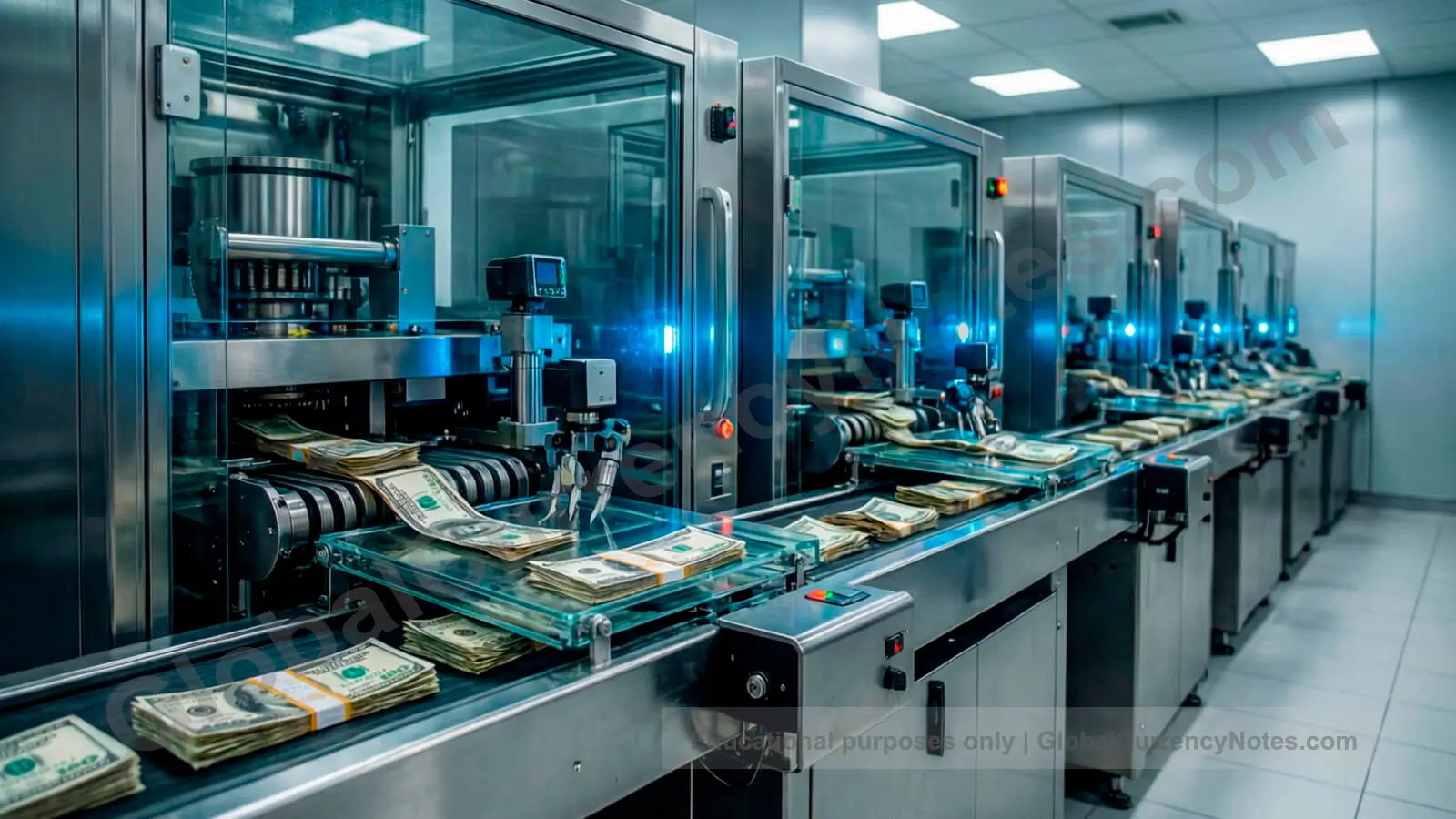
Modern central banks rely on high-speed automated processing systems to evaluate whether individual banknotes should remain in circulation or be withdrawn and destroyed.
Automated Fitness Sorting
When commercial banks deposit currency at central bank cash offices, sophisticated banknote processing systems scan each note using multiple sensor technologies. These machines can process thousands of notes per minute, evaluating various physical and optical characteristics simultaneously.
Fitness Criteria
While specific standards vary by country and currency, central banks generally evaluate notes based on:
- Physical damage: Tears, holes, or missing sections. Some central banks, such as the Federal Reserve, use specific size thresholds (for example, holes larger than approximately 19 millimeters) as guidelines for unfitness, though actual criteria may vary
- Soiling and staining: Excessive dirt, discoloration, or contamination that affects appearance or readability
- Limpness and structural integrity: Notes that have lost stiffness through heavy use may not function properly in ATMs or vending machines
- Faded or obscured security features: When printed elements become too faint to verify authenticity easily
- Graffiti or writing: Notes with excessive markings that obscure design elements or serial numbers
Fit vs Unfit Classification
A «fit» banknote meets quality standards and is returned to circulation through commercial banks, ATMs, and other distribution channels. An «unfit» banknote fails one or more quality criteria and is separated for destruction. This binary classification helps ensure that only acceptable-quality currency remains in public use.
Contaminated Currency
Some banknotes are withdrawn and destroyed regardless of physical condition due to contamination. According to reports from various central banks, contamination types can include notes found in certain circumstances, contaminated by biological materials, exposed to hazardous substances, or marked by anti-theft systems. Specific handling procedures vary by jurisdiction. These notes are typically destroyed to help prevent disease transmission and maintain public health standards.
The Secure Destruction Process
Once banknotes are classified as unfit, they must be destroyed in ways that prevent any possibility of reconstruction or illegal re-entry into circulation.
Online vs Offline Destruction
Central banks typically use two primary approaches to destroy unfit banknotes:
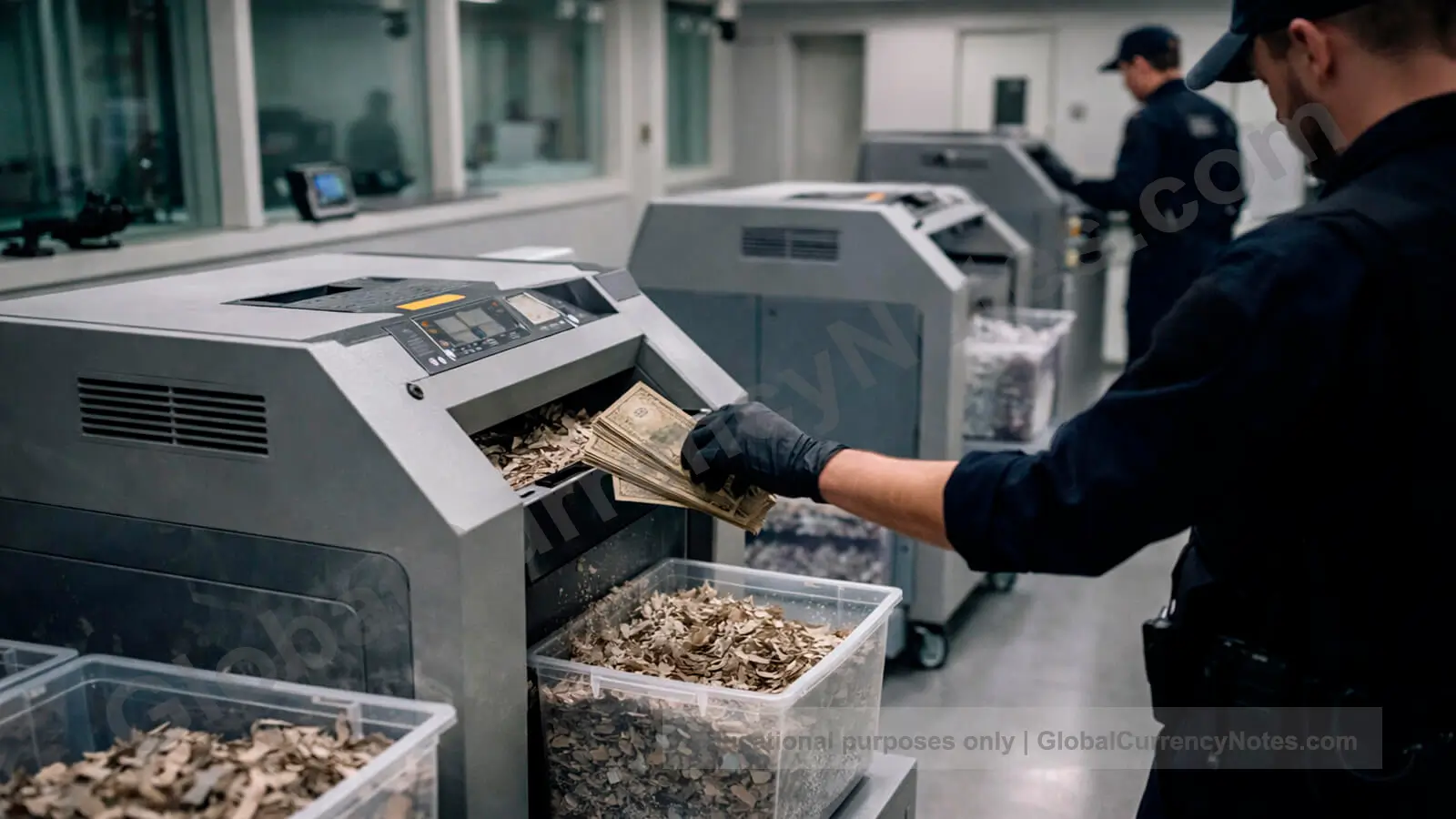
Online destruction occurs when banknote processing systems include integrated shredding modules. As the sorting machine identifies an unfit note, it immediately routes the note to a built-in shredder that destroys it on the spot. This approach is efficient for high-volume processing but typically produces larger shred sizes (approximately 2-3 x 10-15mm in many systems).
Offline destruction uses dedicated high-security shredding systems separate from sorting machines. Bundles of unfit notes are fed into industrial shredders that reduce currency to much smaller particles. Common offline shred sizes can be approximately 6 x 6mm or smaller, often meeting or exceeding P-5 security levels as defined in relevant security standards. Specific sizes and standards vary by facility and jurisdiction.
Shredding and Granulating
The destruction process typically involves multiple stages. Initial shredding reduces banknotes to strips or fragments. A granulator—a high-speed rotating knife mill—then further reduces these shreds to uniform particles small enough to prevent reconstruction. Security standards generally require final particle sizes that make reconstruction physically impossible, especially since shreds from many different notes are commingled during processing.
This multi-stage process typically converts each banknote into hundreds of tiny pieces, making reconstruction extremely difficult or impossible when combined with particles from numerous other notes.
Briquetting and Volume Reduction
After shredding, many central banks compress the resulting paper particles into dense briquettes—cylindrical or rectangular blocks. Briquetting can significantly reduce waste volume, decreasing storage space requirements and transportation costs for disposal. Actual volume reduction ratios vary by system and material.
Modern briquetting systems often include sophisticated filtration to clean transport air before release and dust extraction systems to help maintain clean, safe working conditions.
What Happens to Shredded Currency
Environmental considerations have influenced how central banks dispose of destroyed currency. According to U.S. Bureau of Engraving and Printing sustainability reports, recycling rates for destroyed currency have increased substantially over recent decades. Federal Reserve reports indicate that a high percentage of destroyed U.S. currency is now recycled or repurposed, though exact percentages vary by facility and year.
Recycling and Repurposing
Shredded banknotes can be converted into various useful products:
- Energy generation: Some Federal Reserve Banks partner with facilities that burn shredded currency to generate electricity for local businesses and homes
- Agricultural products: Processed shreds can become mulch, compost, or potting soil components
- Building materials: Currency residue may be converted into fuel pellets or home insulation material
- Industrial applications: Compressed briquettes can serve various manufacturing purposes
Modern processing typically removes or neutralizes substances that might cause problems in various applications, though specific methods and effectiveness vary by facility.
Scale of Withdrawal Operations
The daily volume of banknote withdrawal and destruction can be substantial. Federal Reserve reports have indicated significant daily and annual processing volumes, though exact figures vary by location, time period, and economic conditions. Major Federal Reserve Banks have reported destroying millions of dollars in notes daily, with the entire U.S. system recycling substantial amounts of currency annually. Specific volumes fluctuate based on circulation patterns, currency demand, and note lifespan.
These operations require continuous coordination between printing facilities and destruction centers to help maintain stable currency supplies while upgrading overall note quality.
Legal Tender vs Circulating Currency
An important distinction exists between legal tender status and active circulation status in many jurisdictions.
Withdrawn but Still Legal Tender
Many countries allow older banknote series to retain legal tender status even after withdrawal from active circulation. Legal tender status and acceptance policies vary significantly by country and jurisdiction. For example, when some central banks introduce new series, previous series notes may remain valid at face value, but financial institutions may be instructed to withdraw them rather than re-issue them to customers. Specific policies differ substantially by country.
In the United States, older-design Federal Reserve Notes typically remain legal tender indefinitely under current policy. However, if such a note is deposited at a bank and sent to a Federal Reserve Bank, it will generally be withdrawn from circulation and destroyed, replaced with a current-design note. Legal tender rules, acceptance policies, and withdrawal procedures vary by jurisdiction—always consult local authorities for specific guidance applicable in your region.
Non-Circulating Legal Tender
Some legitimate currency may have legal tender status but is deliberately kept out of circulation. This category can include high-value commemorative notes, collector pieces issued by central banks, and certain specialty denominations. Conversely, some historical notes may still circulate informally despite technically being withdrawn. Specific situations vary by country and currency.
Redeeming Damaged Personal Currency
When individuals possess damaged banknotes, redemption options typically exist, though policies vary significantly by country and jurisdiction.
Moderately Damaged Notes
Most commercial banks accept moderately worn or damaged notes from customers, forwarding them to central banks for evaluation. If the note is genuine and identifiable according to local standards, banks often provide immediate replacement or credit, handling the damaged note as part of their regular cash operations. Specific acceptance criteria vary by bank and jurisdiction.
Severely Mutilated Currency
For severely damaged currency—notes affected by fire, water damage, chemical exposure, animal damage, or other destructive events—many central banks operate specialized redemption services, though policies, procedures, and eligibility criteria vary significantly by country.
The U.S. Bureau of Engraving and Printing’s Mutilated Currency Division has reported processing thousands of claims annually, redeeming substantial amounts of mutilated currency, though volumes vary by year. According to their published guidelines, redemption evaluation is typically conducted on a case-by-case basis. Some jurisdictions use approximate percentage thresholds (such as «more than 50% identifiable») as general guidelines, but actual redemption decisions depend on multiple factors including identifiability of security features, serial numbers, and the nature of damage. If claimants can demonstrate that missing portions were completely destroyed, different evaluation criteria may apply. Specific requirements, submission procedures, processing times, and evaluation standards differ substantially by country and central bank.
Important: Redemption policies are not universal and vary significantly by jurisdiction. Processing can take considerable time—weeks to months in some cases—as specialists carefully examine submitted materials. For authoritative guidance on damaged currency redemption in your specific location, always contact your local central bank, treasury department, or relevant monetary authority directly.
Frequently Asked Questions
What makes a banknote «unfit» for circulation?
A banknote becomes unfit when it fails quality standards set by the central bank. Common reasons include significant tears or holes, excessive soiling or staining, loss of structural integrity (limpness), faded security features, or contamination by hazardous substances. Specific criteria vary by country and central bank—for example, some central banks use size thresholds for damage assessment while others employ different evaluation methods. Contact your local central bank for specific fitness criteria applicable in your jurisdiction.
Can I still use an old-design banknote that looks different from current currency?
In many countries, older banknote series retain legal tender status, though policies vary significantly by jurisdiction. You may be able to use them for purchases, though some merchants may be unfamiliar with older designs or have acceptance policies. However, if you deposit an old-design note at a bank, it may be sent to the central bank and withdrawn from circulation, replaced with a current-design note. Legal tender rules and acceptance policies differ by country—consult your local central bank for specific guidance.
What happens if I accidentally damage currency—can I get it replaced?
Redemption options for damaged currency vary by country and central bank. For moderately damaged notes, many banks will accept them and provide replacement value according to their policies. For severely damaged currency (burned, torn into fragments, water-damaged), many countries offer redemption services through central banks or treasury departments, though specific eligibility criteria, submission procedures, and evaluation standards differ substantially by jurisdiction. Contact your local banking institution or central bank for guidance on procedures applicable in your region.
Why don’t central banks just repair damaged notes instead of destroying them?
Repairing individual banknotes would generally be prohibitively expensive and time-consuming compared to printing new ones. Additionally, repair attempts could potentially compromise security features or create opportunities for counterfeiting. Destruction and replacement is typically more secure and economical for maintaining currency quality and security standards.
How small are the pieces when a banknote is shredded?
Modern high-security shredders typically reduce banknotes to very small particles—often smaller than 30 square millimeters in high-security applications. Each note is generally converted into hundreds of tiny pieces, which are mixed with shreds from numerous other notes. Specific shred sizes and security standards vary by facility, jurisdiction, and the security level required. The combination of small particle size and commingling makes reconstruction extremely difficult or impossible.
Is destroying money illegal?
Laws regarding currency destruction vary significantly by country and jurisdiction. In some jurisdictions, including the United States, intentionally destroying currency with certain intents may be illegal, though accidental damage typically is not. Central banks have legal authority to destroy unfit currency as part of their monetary management responsibilities. Specific laws and regulations differ by country—consult local legal authorities for rules applicable in your jurisdiction.
How long does it take for a withdrawn note to be completely destroyed?
Timelines vary significantly by facility and processing method. Once a note is classified as unfit, the actual destruction process can be rapid—modern shredding systems can process substantial volumes per hour. The timeline from deposit to destruction varies: notes withdrawn through high-speed sorting systems with integrated shredders may be destroyed within minutes to hours; notes sent for offline destruction may be held securely until sufficient volume accumulates, typically days to weeks. Specific processing times depend on facility operations, security protocols, and volume management practices.
Disclaimer: Information provided is for educational purposes only and does not constitute professional advice. Banknote standards and regulations vary by jurisdiction and are subject to change. Readers should exercise their own judgment. For full legal disclosures and liability limitations, visit our Legal Notice.