Part of: Banknote Security
Comprehensive guide to euro currency security technologies, authentication methods, and design features across all denominations in circulation.
Euro banknotes combine multiple layers of advanced security features with distinctive design elements across seven denominations, creating what is considered one of the world’s most sophisticated currency systems. According to the European Central Bank, the Europa series, introduced progressively between 2013 and 2019, incorporates enhanced technologies including the emerald number, portrait window, and improved holographic elements designed to protect against counterfeiting while remaining accessible for verification without specialized equipment.
Twenty countries use the euro as their official currency, with a substantial portion of euro banknotes circulating outside the eurozone according to ECB estimates. This widespread international usage makes euro security features important for broader financial system integrity and confidence.
Understanding these security features helps users protect themselves against counterfeits. While counterfeiting rates remain relatively low compared to genuine circulation volumes due to effective enforcement and detection efforts, ongoing vigilance remains important.
Euro Denominations and Design
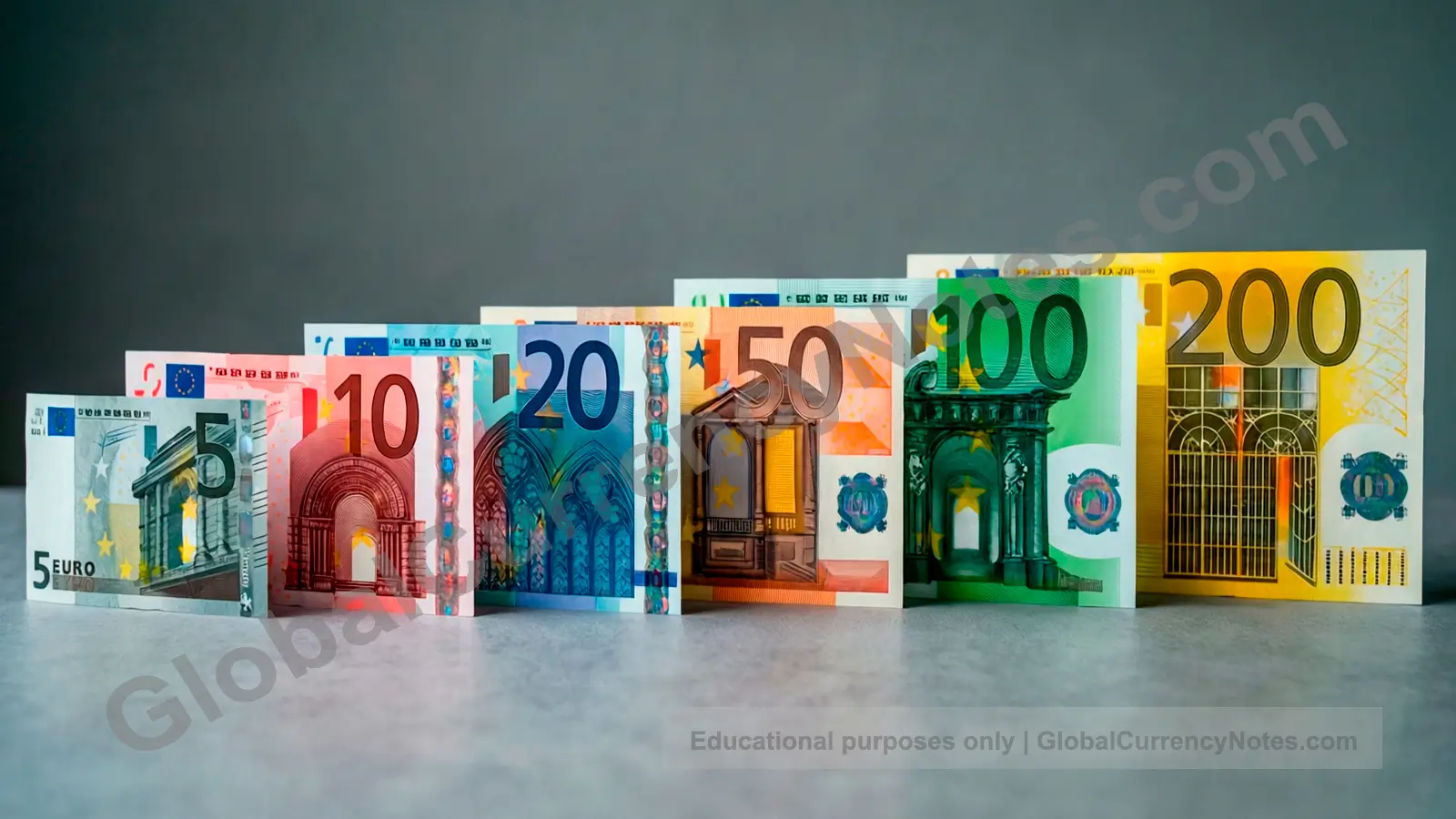
Euro banknotes range from €5 to €200, with each denomination featuring distinct size, color, and architectural design elements representing different periods of European architecture. According to ECB design documentation, the progressive sizing helps visually impaired users distinguish values through touch and measurement.
Denomination Specifications
Each denomination has characteristic size and color schemes based on ECB specifications. The €5 note features classical architecture in gray tones, the €10 represents Romanesque architecture in red, the €20 shows Gothic elements in blue, the €50 displays Renaissance architecture in orange, the €100 features Baroque and Rococo styles in green, and the €200 represents iron and glass architecture in yellow-brown tones. Specific dimensions are published by the ECB for each denomination.
The €500 note, which featured modern 20th-century architecture, ceased production in 2019 based on ECB policy decisions regarding high-denomination notes. According to ECB announcements, existing €500 notes remain legal tender indefinitely but are gradually withdrawn from circulation as they return to central banking systems.
Architectural Theme
Each denomination depicts bridges and gateways representing different European architectural periods. The front shows windows and doorways symbolizing openness and cooperation, while the reverse displays bridges connecting European nations. These designs intentionally avoid depicting actual monuments to represent the entire European Union without favoring specific countries or locations.
First Series vs Europa Series
The European Central Bank has introduced euro banknotes in two distinct series, each with progressively enhanced security features based on technological developments and counterfeiting threat assessments.
First Series (2002-2019)
The original euro banknotes launched on January 1, 2002, across the initial eurozone countries, replacing national currencies. These notes incorporated security thread, watermark, hologram stripe, see-through register, and color-shifting ink. While representing advanced anti-counterfeiting technology for their time, continued technological improvements in printing and digital reproduction necessitated enhanced security measures.
Europa Series (2013-Present)
Named after the mythological figure featured in the watermark and hologram, the Europa series introduced significantly upgraded security features. According to the ECB, rollout occurred gradually by denomination: €5 in May 2013, €10 in September 2014, €20 in November 2015, €50 in April 2017, and €100 and €200 in May 2019. The €500 was not included in the Europa series.
The Europa series added the emerald number, portrait window (on €20 and higher denominations), enhanced hologram, and improved security thread. These features utilize advanced optical technologies designed to remain challenging to replicate even with sophisticated equipment.

Europa Series Security Features
The Europa series incorporates multiple layers of security features designed for verification without special equipment while providing sophisticated protection against counterfeiting. According to the European Central Bank, these enhanced features represent significant technological advancement over the original series.
Emerald Number
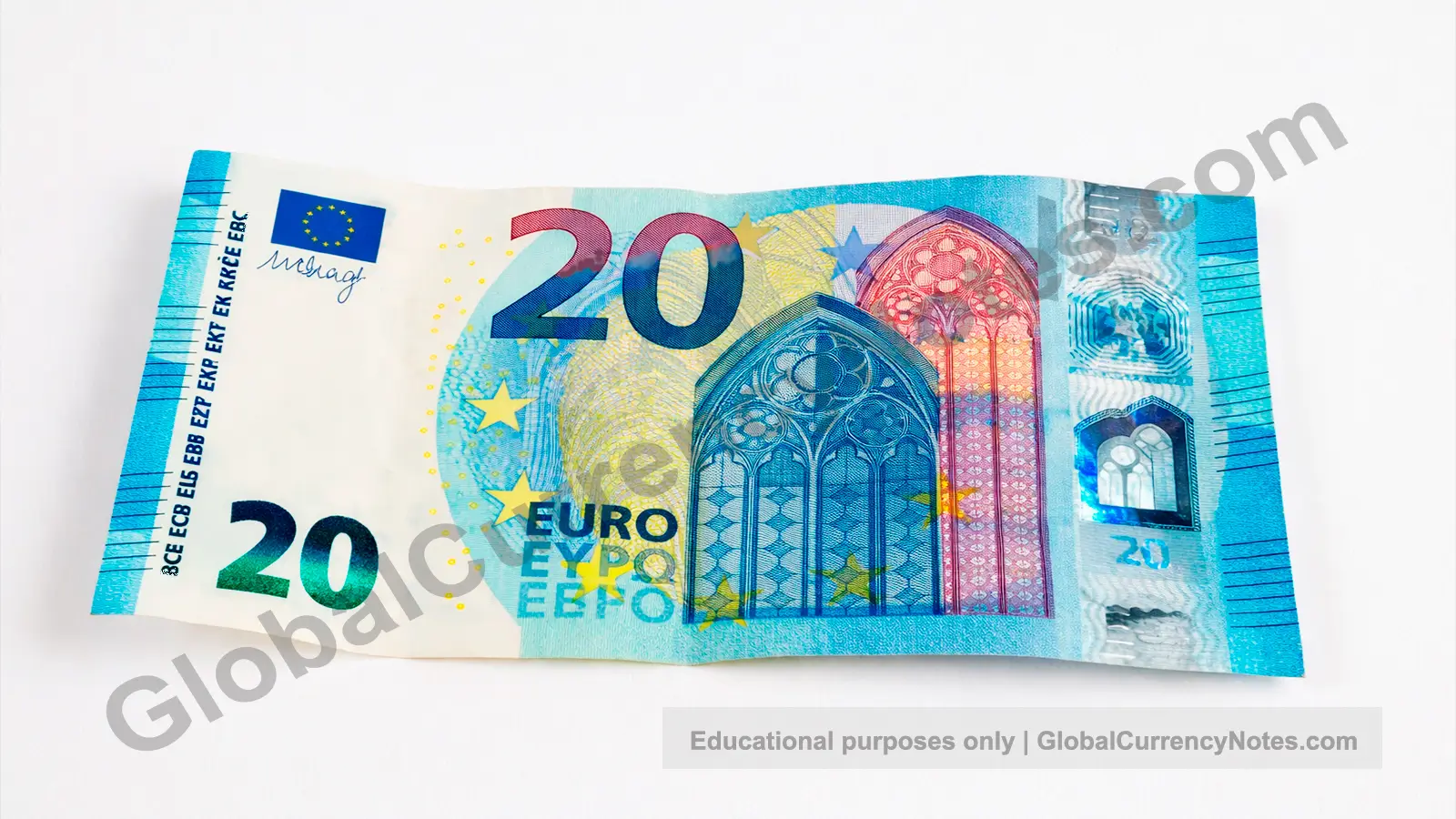
Positioned in the lower left area of each Europa series note, the emerald number displays the denomination in color-shifting ink. When tilted, the number changes from emerald green to deep blue, while a light effect appears to move within the number. The number also contains tiny € symbols visible under magnification. This feature uses optically variable ink containing microscopic reflecting elements that create effects challenging to reproduce with standard printing or photocopying equipment.
Portrait Window (€20, €50, €100, €200)
The portrait window appears as a transparent element near the top of the hologram on higher denominations. When held against light, the window becomes see-through, revealing a portrait of Europa visible from both sides of the note. In the hologram, the same portrait appears within the window along with the denomination value. This feature requires specialized transparent polymer technology embedded within the cotton fiber substrate, representing a significant technical barrier to counterfeiting.
Portrait Hologram
The silvery stripe on the right side of Europa series notes contains multiple security elements. On lower denominations (€5, €10), the hologram shows the portrait of Europa, the denomination, and main design motif. On higher values (€20, €50, €100, €200), the hologram includes the portrait window and displays the € symbol. When tilted, the holographic images shift and reveal different elements.
Raised Printing
Genuine euro banknotes use intaglio printing that creates raised ink detectable by touch. The main image, lettering, and large value numerals have a distinctive tactile quality. Running your finger across the note reveals this texture, particularly noticeable on denomination numbers and edge lettering. This printing technique requires specialized equipment and significant manufacturing investment, creating substantial barriers to accurate replication.
Security Thread
A dark stripe embedded in the paper runs through each banknote. When held against light, it appears as a continuous line. The thread contains microprinting showing the denomination and the € symbol. Under ultraviolet light, the thread emits distinct colors specific to each denomination, providing an additional verification method though not essential for basic authentication.
Watermark
Holding the note against light reveals a watermark showing the portrait of Europa and the denomination value. The watermark appears as part of the paper structure itself, visible from both sides, with gradual tonal transitions. Counterfeit watermarks are typically printed on the surface and lack the subtle tonal variations and bi-directional visibility of genuine watermarks.
Common Security Features Across Both Series
Both the first series and Europa series share several fundamental security elements that form the foundation of euro banknote protection.
Feel-Look-Tilt Verification Method
The European Central Bank recommends the Feel-Look-Tilt method for quick authentication without specialized equipment:
Feel: Genuine notes have a distinctive firm texture from the cotton fiber paper and raised printing. The main image and denomination numbers should feel noticeably raised to touch.
Look: Hold the note against light to see the watermark, portrait window (on applicable denominations), and security thread running through the note. These elements should be clearly visible and show proper characteristics.
Tilt: When tilted, observe color-shifting effects in the hologram and emerald number (Europa series). The color changes should be clear and distinct.
Paper Quality
Euro banknotes are printed on 100% pure cotton fiber, giving them a distinctive feel compared to standard paper. The substrate is designed for durability while incorporating security features. Genuine notes have a characteristic crispness and resilience that differs from ordinary paper or low-quality counterfeits.
Microprinting
Tiny text appears in various locations on euro notes, generally readable only with magnification. Standard photocopiers and printers typically produce these fine details as blurred lines rather than sharp text, making microprinting an effective anti-counterfeiting measure.
How to Verify Euro Authenticity
Effective verification uses multiple features rather than relying on a single element.
Manual Verification
The Feel-Look-Tilt method can detect many common counterfeits without requiring special equipment. Combining tactile, visual, and color-shifting checks provides reasonable assurance for most everyday transactions, though no manual method provides absolute certainty in all cases.
UV Light Verification
Under ultraviolet light, specific elements of euro notes become visible or change appearance. The paper should remain dark (genuine notes use UV-dull paper), while certain printed elements fluoresce in specific colors. The security thread glows in denomination-specific colors. However, UV verification is supplementary to other methods rather than definitive on its own.
Professional Authentication
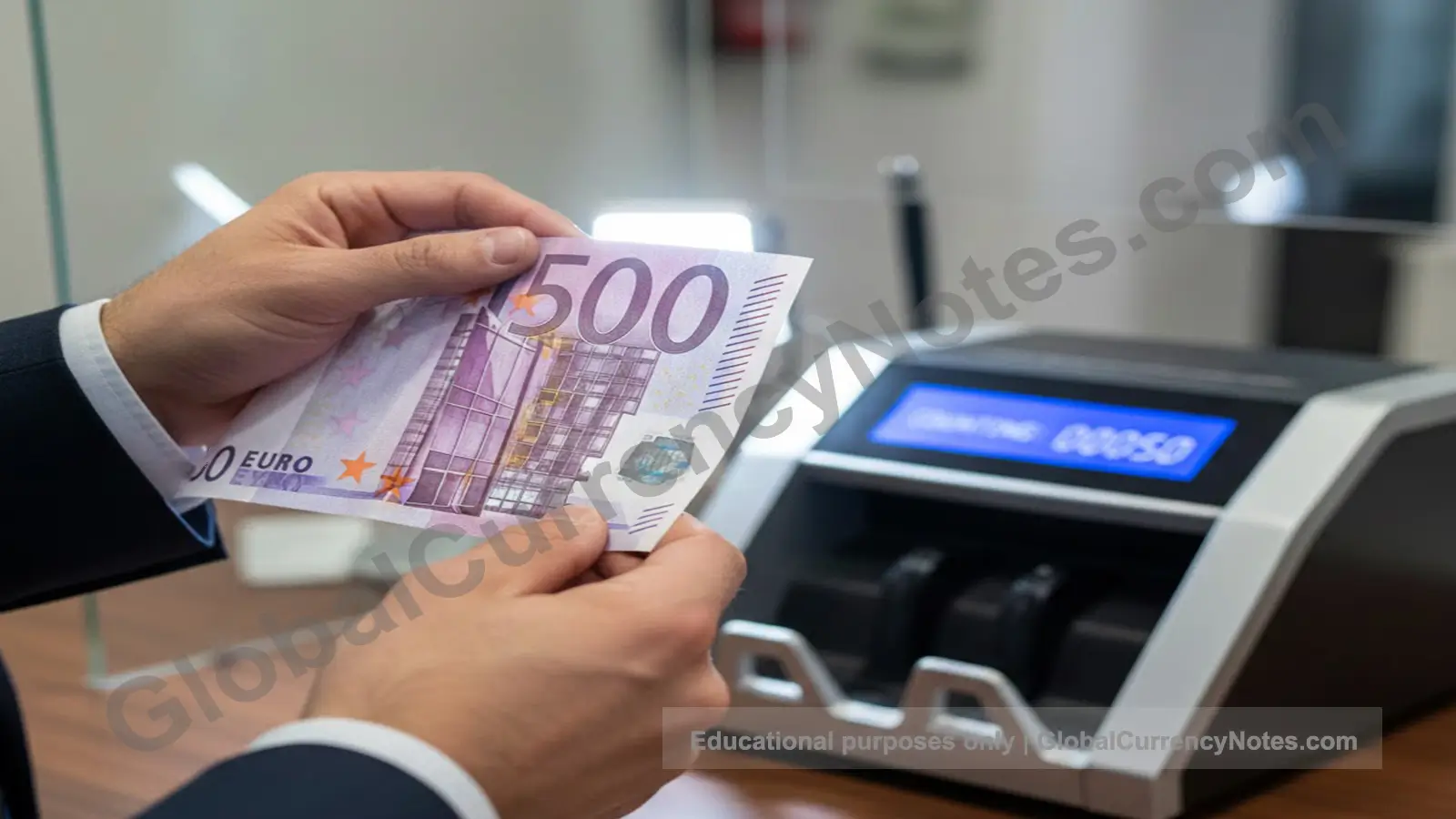
Banks and businesses handling large cash volumes typically use automated detection equipment that verifies multiple security features simultaneously. According to the ECB, these systems check for proper paper composition, magnetic properties, UV characteristics, and other machine-readable elements.
Understanding Counterfeiting Threats
Counterfeiting Rates
According to periodic ECB reports, counterfeiting rates for euro banknotes remain relatively low compared to total circulation volumes, though specific figures vary by reporting period and detection methodology. Effective law enforcement cooperation across eurozone countries and sophisticated detection systems contribute to keeping counterfeit rates manageable.
Most Targeted Denominations
ECB data suggests that mid-range denominations, particularly the €20 and €50 notes, historically attract more counterfeiting attention than very low or very high denominations. This pattern reflects both widespread circulation and acceptance without excessive scrutiny. However, counterfeiting patterns evolve over time based on enforcement priorities and counterfeiter capabilities.
Common Counterfeiting Methods
Modern counterfeiters primarily use high-quality digital printing equipment. Sophisticated operations may attempt to replicate multiple security features, though genuine notes’ combination of technologies remains challenging to duplicate convincingly. Detection rates remain high when proper verification procedures are followed.
Euro Banknotes in International Context
Reserve Currency Status
Central banks and governments worldwide hold euros as part of their foreign exchange reserves. According to International Monetary Fund data, the euro represents a significant portion of global foreign exchange reserves. This status depends partly on maintaining confidence in euro banknote security and resistance to counterfeiting.
Cross-Border Verification
The European Central Bank coordinates with financial institutions worldwide to provide authentication training and resources for euro verification. Banks and exchange offices in non-eurozone countries receive educational materials and may have access to detection devices to help protect against counterfeits in international circulation.
Future of Euro Banknotes
The European Central Bank continuously researches new security technologies and design approaches to address evolving counterfeiting threats.
Redesign Considerations
Following the completion of the Europa series in 2019, the ECB has announced plans for future banknote development. Public consultation processes have gathered input on potential themes for future designs. Specific features, timelines, and implementation approaches remain subject to ongoing development, security assessments, and technical feasibility evaluations. Actual release schedules and design elements may vary from any preliminary announcements based on these ongoing processes.
Enhanced Machine Readability
Future euro banknotes will likely incorporate enhanced machine-readable security features that allow automated systems to verify authenticity more reliably. These features would work alongside public security elements, creating multiple authentication layers. Advanced sensors in processing equipment can potentially detect features not visible to unaided human perception.
Sustainable Production
The ECB researches environmentally sustainable banknote production methods, including materials and manufacturing processes that reduce environmental impact. While maintaining essential security characteristics, innovations in treatment and coating could potentially extend banknote circulation lifespan, reducing replacement frequency and associated environmental costs.
Frequently Asked Questions
What is the most secure euro banknote denomination?
All Europa series notes incorporate sophisticated security features designed to work together as an integrated system. Higher denominations (€100 and €200) contain the complete suite of protections including the portrait window, emerald number, enhanced hologram, and security thread. However, all denominations from €5 to €200 provide robust protection when properly verified using recommended methods. Security effectiveness depends on proper verification rather than denomination alone.
Are first series euro notes still valid?
Yes. According to ECB policy, all first series euro banknotes remain legal tender indefinitely and can be used for transactions throughout the eurozone. National central banks exchange first series notes for Europa series notes upon request, though there is no requirement to do so. Both series circulate simultaneously and maintain equal legal validity.
How can I tell if a euro note is from the Europa series?
Europa series notes feature the emerald number in the lower left area, which changes color from green to blue when tilted. Notes €20 and higher also contain the portrait window showing Europa’s face when held against light. Additionally, the signature on Europa series notes belongs to the current ECB President, while first series notes show previous presidents’ signatures. The ECB provides detailed identification guides for distinguishing between series.
Why was the €500 note discontinued?
The European Central Bank stopped producing €500 notes in 2019 based on concerns that high-denomination notes may facilitate certain illicit activities. Law enforcement agencies had reported that high-value notes were sometimes preferred for storing and transporting large sums in criminal contexts. According to ECB policy, existing €500 notes remain legal tender indefinitely but are gradually withdrawn as they return to central banking systems through normal circulation.
What should I do if I receive a counterfeit euro note?
Do not return the note to the person who gave it to you, as this could create safety concerns and complicate investigation. Contact your local police or bring it to a bank, which will forward it to the national central bank for analysis according to established procedures. You typically will not receive compensation for surrendered counterfeits, as they have no legitimate value. Handle the note minimally to preserve any potential forensic evidence. Providing information about where and when you received it may help authorities investigate counterfeiting activities. Specific procedures may vary by country—follow local law enforcement guidance.
How long do euro banknotes typically last in circulation?
Lifespan varies significantly by denomination based on usage frequency and handling conditions. Lower denominations that change hands frequently typically require replacement sooner than higher denominations used less often for daily transactions. According to ECB information, circulation lifespan can range from approximately one to several years depending on denomination and usage patterns. Actual lifespan for individual notes varies based on many factors including handling practices and circulation intensity.
Can euro security features be verified without special equipment?
Yes. The Feel-Look-Tilt method allows verification of the most important security features using only natural senses. Feel the raised printing, look at the watermark and security thread against light, and tilt to observe color-shifting elements. These checks can detect many common counterfeits. Professional cash handlers may use UV lamps and magnification for additional verification, but these tools are not necessary for basic authentication in most circumstances. However, no verification method provides 100% certainty without professional authentication equipment and training.
Disclaimer: Information provided is for educational purposes only and does not constitute professional advice. Banknote standards and regulations vary by jurisdiction and are subject to change. Readers should exercise their own judgment. For full legal disclosures and liability limitations, visit our Legal Notice.