Part of: Banknote Types & Materials
This article is part of the Banknote Types & Materials hub, covering how banknotes are designed, produced, and classified.
Paper vs polymer banknotes represent two fundamentally different substrate technologies used in modern currency production. Traditional cotton-based paper and contemporary polymer plastic each offer distinct advantages and face specific challenges in durability, security, and real-world performance.
This comprehensive comparison examines the technical characteristics, security features, lifespan, environmental impact, and economic trade-offs of both materials. According to the Bank of England, polymer notes last approximately 2.5 times longer than paper predecessors under typical circulation conditions, while the Reserve Bank of Australia reports generally greater longevity improvements since pioneering polymer technology in 1988. Performance varies significantly by climate, circulation patterns, and implementation.
Understanding Paper Banknotes
Composition and Structure
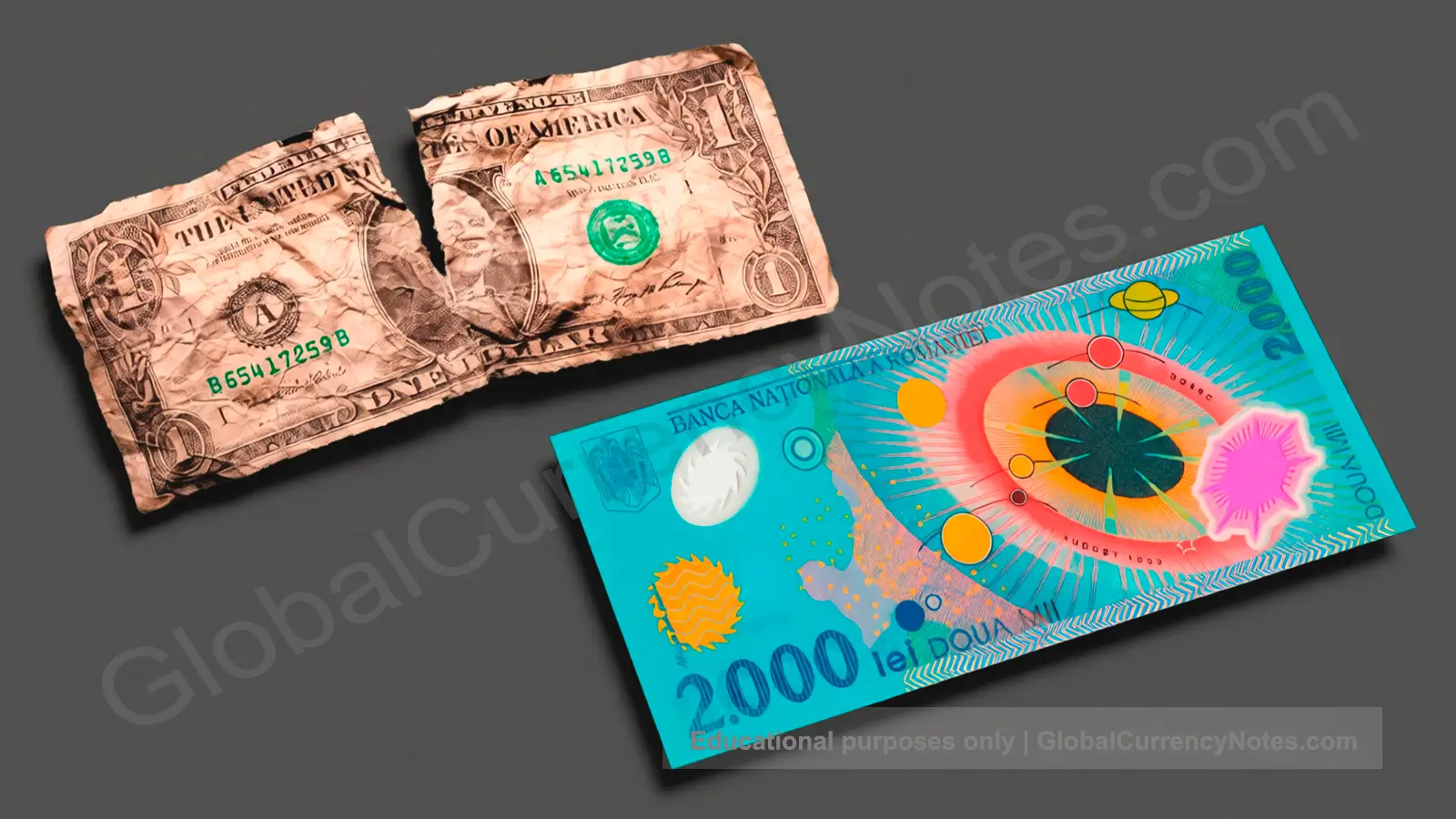
Despite the name «paper money,» most modern banknotes are not made from standard wood-pulp paper. Traditional banknotes typically use specialized substrates composed primarily of cotton fibers, often blended with linen or other textile materials. This composition creates the distinctive feel that differentiates banknotes from ordinary paper.
The manufacturing process involves creating sheets from cotton fibers suspended in water, then pressing and drying them to achieve specific thickness and density. During production, security features like watermarks and security threads are embedded within the substrate structure itself, making them integral to the note rather than applied elements.
Key Characteristics
- Texture: Distinctive tactile quality—softer than wood-pulp paper but firmer than fabric
- Flexibility: Can be folded repeatedly, though creases become permanent over time
- Printing compatibility: Excellent substrate for intaglio printing, which creates raised texture
- Security integration: Watermarks, threads, and other features embedded during manufacturing
- Absorbency: Slight moisture absorption, which affects feel and durability
Understanding Polymer Banknotes
Composition and Structure
Polymer banknotes are manufactured from biaxially oriented polypropylene (BOPP)—a thin, flexible plastic film produced by stretching polypropylene in two perpendicular directions. This biaxial orientation creates exceptional strength and dimensional stability while maintaining flexibility.
The base film is initially transparent. An opacification process adds white pigment to selected areas, leaving clear windows that become distinctive security features. Multiple coating layers are then applied to create printable surfaces compatible with various ink technologies.
Key Characteristics
- Texture: Smooth, slightly slippery surface quite different from paper
- Transparency: Clear windows possible—impossible with paper substrates
- Water resistance: Highly resistant to moisture penetration
- Durability: Resistant to tearing, though can develop permanent creases
- Tactile response: Returns to flat shape when crumpled, unlike paper which retains wrinkles
Durability and Lifespan Comparison
Paper Banknote Longevity
Paper banknote lifespan varies significantly by denomination and circulation patterns. Lower denominations that change hands frequently typically last approximately 18 months to 3 years under normal circulation conditions. Higher denominations, which circulate less intensively, may last approximately 5 to 7 years or longer before wear necessitates replacement. Actual lifespan depends on handling intensity, climate, and cash-processing infrastructure.
Primary degradation factors include:
- Physical handling wear—repeated folding and unfolding weakens fibers
- Moisture exposure—water damage and humidity affect structural integrity
- Contamination—dirt, oils, and organic matter accumulate in fibers
- Mechanical processing—ATM and sorting machine handling accelerates wear
Polymer Banknote Longevity
Polymer notes generally last approximately 2.5 to 4 times longer than equivalent paper denominations under similar circulation conditions, though results vary by climate and implementation. The Bank of England reports their polymer notes lasting approximately 2.5 times longer than paper predecessors in temperate conditions, while the Reserve Bank of Australia cites generally greater longevity improvements in their environment.
However, polymer longevity depends significantly on environmental conditions:
- Temperate climates: Generally excellent performance with extended lifespan
- Hot, humid conditions: Some countries have reported accelerated wear and color fading
- Extreme folding: Develops permanent creases that cannot be reversed
- Surface abrasion: While tear-resistant, polymer can develop surface scratches over time
Security Features: Capabilities and Limitations
Paper Banknote Security
Paper substrates support well-established security technologies refined over centuries:
- Watermarks: Tonal images created by density variations during paper formation
- Security threads: Polymer or metallic strips embedded in paper structure
- Intaglio printing: Raised ink deposits creating distinctive tactile texture
- Color-shifting inks: Optically variable pigments that change appearance when tilted
- Microprinting: Extremely small text requiring magnification to read
- UV and IR features: Fluorescent and infrared-reactive elements
Polymer Banknote Security
Polymer substrates enable all paper security features plus additional polymer-specific technologies:
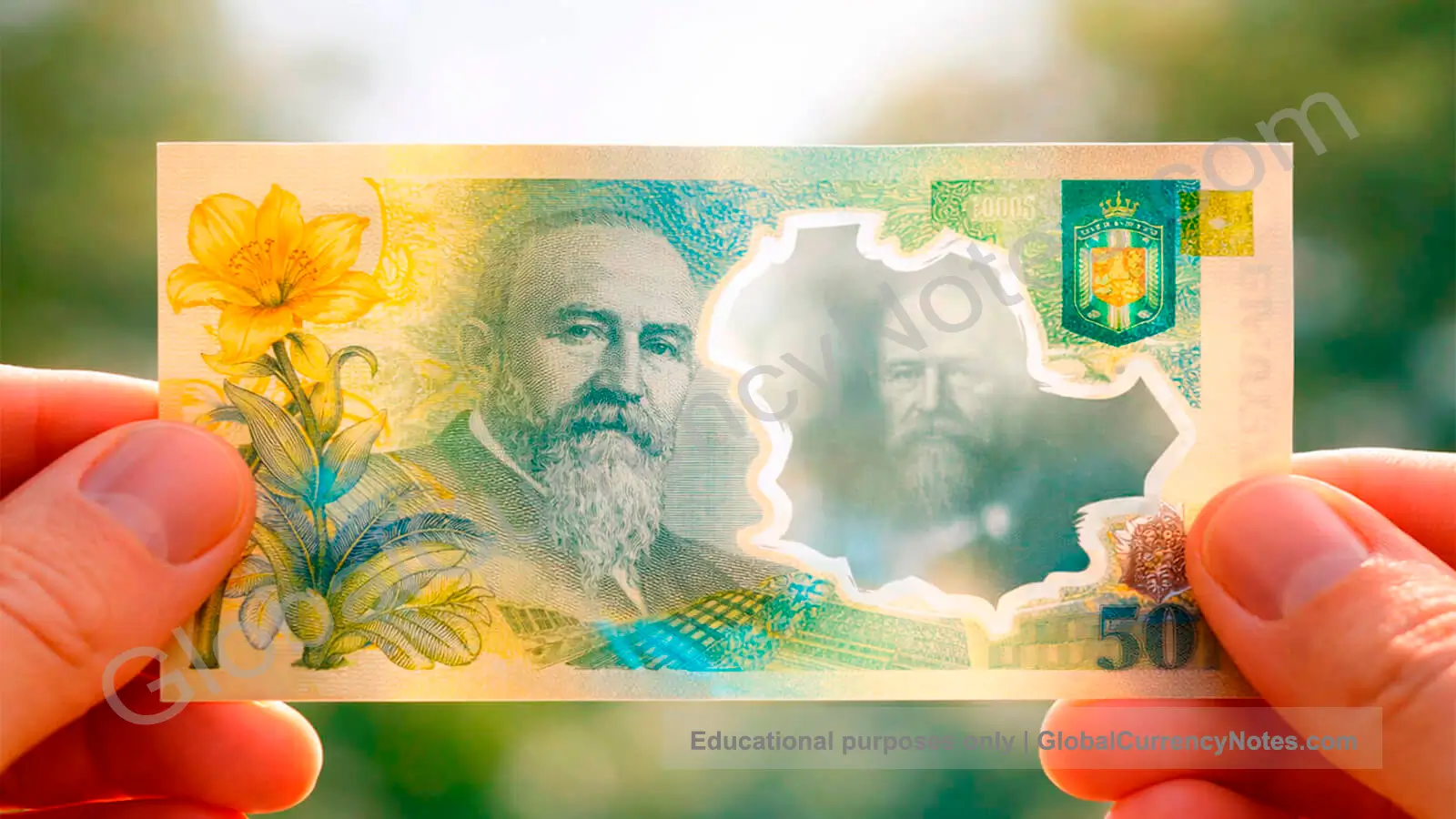
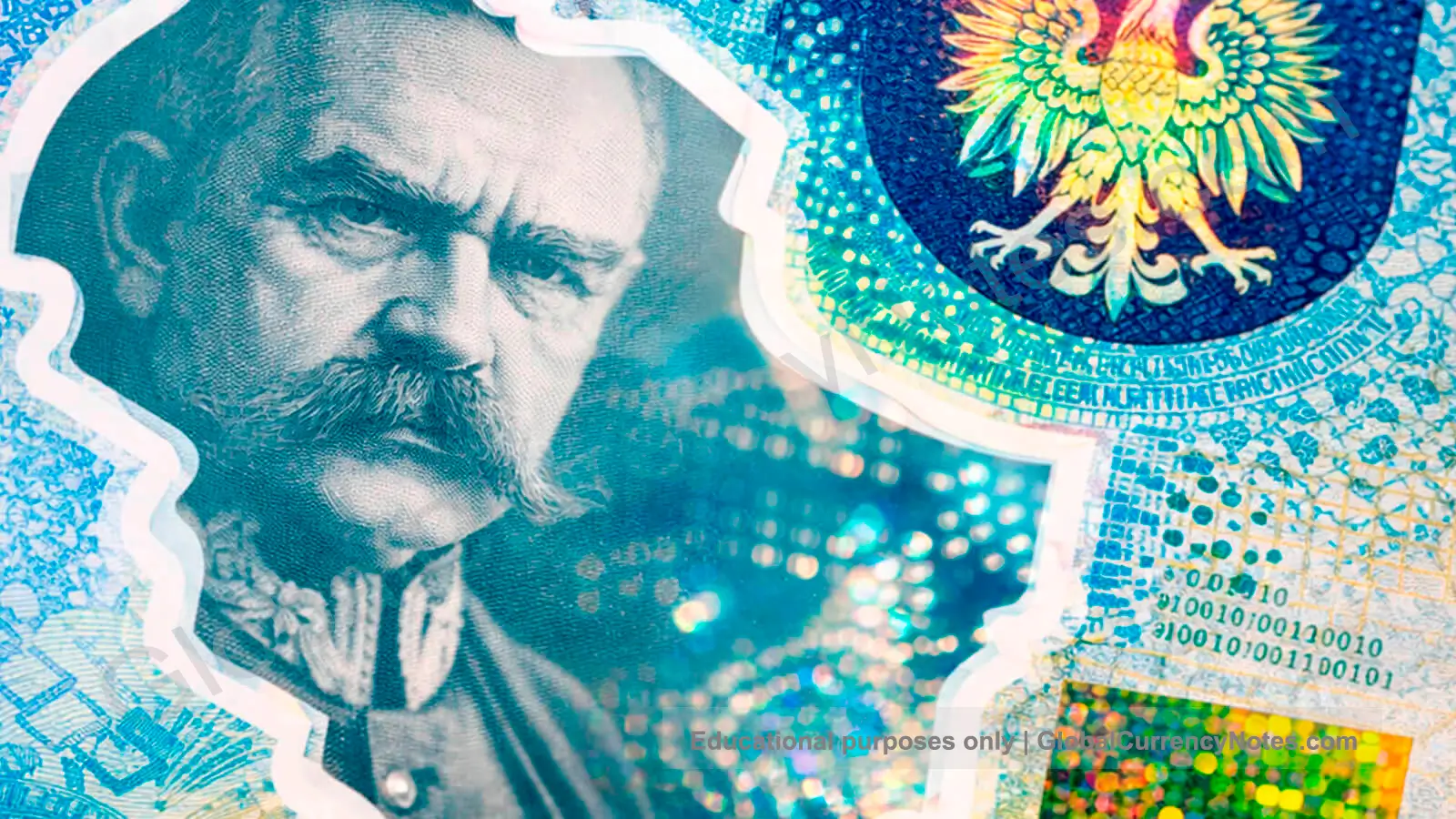
- Transparent windows: Clear sections impossible in paper, containing printed or holographic elements
- Shadow images: Designs printed on opposite sides that align when viewed through windows
- Advanced holograms: Multi-layer optically variable devices integrated into substrate
- Metallic features: Foils and metallic inks that bond better to polymer surfaces
- Embossing: Raised features created through substrate deformation
These additional capabilities generally make polymer notes more difficult to counterfeit convincingly, though both substrates can incorporate sophisticated security when properly implemented.
Advantages and Disadvantages: A Balanced Analysis
Polymer Banknote Advantages
- Extended lifespan: Typically lasts approximately 2.5 to 4 times longer than paper in temperate climates under normal conditions, potentially reducing replacement frequency and long-term costs
- Water resistance: Highly resistant to moisture, preventing most water damage—notes often survive washing machines and weather exposure
- Enhanced security options: Transparent windows and advanced features provide counterfeit resistance that is generally more difficult to replicate
- Hygiene benefits: Non-porous surface resists bacterial growth and can be cleaned more easily
- Recyclability: Can typically be melted and reformed into plastic products after circulation ends, though recycling infrastructure varies
Polymer Banknote Disadvantages
- Higher initial production cost: Polymer notes generally cost more to produce initially (estimates vary widely by country and implementation), though longer lifespan may offset this over time
- Handling characteristics: Smooth, slippery surface can make counting and handling more difficult, especially when notes are wet or in high humidity
- Permanent creasing: Sharp folds create permanent lines that cannot be smoothed, potentially affecting note appearance and machine readability
- Climate sensitivity: Some implementations have experienced color fading or performance issues in extremely hot, humid climates
- Infrastructure requirements: Existing cash-handling equipment may require calibration or modification to process polymer notes effectively
- Material sourcing concerns: Some polymer note production has involved animal-derived materials (tallow), creating concerns for certain religious and ethical groups
Paper Banknote Advantages
- Lower production cost: Established manufacturing infrastructure and processes generally make paper notes less expensive to produce initially
- Familiar handling: Traditional feel and behavior well-understood by public and businesses
- Folding tolerance: Can be folded repeatedly without developing permanent rigid creases
- Proven technology: Centuries of refinement create reliable, trusted production methods
- Climate adaptability: Generally performs consistently across varying environmental conditions
Paper Banknote Disadvantages
- Shorter lifespan: Typically requires more frequent replacement, potentially increasing long-term costs and resource consumption
- Water vulnerability: Moisture damage can render notes unusable, and wet notes deteriorate rapidly
- Contamination accumulation: Porous structure absorbs dirt, oils, and microorganisms, affecting hygiene and appearance
- Limited security options: Cannot incorporate transparent windows or certain polymer-specific features
- Recycling complexity: Cotton-linen composition requires specialized recycling processes distinct from ordinary paper
How to Distinguish Paper and Polymer Banknotes
Identifying substrate type requires no equipment and takes only seconds:
By Touch
Paper notes have a distinctive textile feel—soft but firm, with slight texture. Polymer notes feel smoother and more slippery, similar to thin plastic packaging. When crumpled, polymer returns to a flat state while paper retains wrinkles.
By Sight
Look for transparent windows—these appear only on polymer notes. Paper notes may have security threads visible when held to light, but these appear as opaque strips, not clear windows.
By Sound
When held at one corner and flicked, polymer produces a sharper, more distinct sound than paper, which creates a softer rustling noise.
Global Adoption: Success Stories and Cautionary Tales
Successful Polymer Transitions
Australia (1988-1996): Pioneered polymer banknotes with the $10 note in 1988. Completed full conversion by 1996. Reports consistently positive results including extended lifespan and reduced counterfeiting.
Canada (2011-2013): Transitioned all denominations to polymer between 2011-2013. Initial public adjustment period followed by widespread acceptance. Bank of Canada reports significant durability improvements.
United Kingdom (2016-2021): Introduced polymer £5 (2016), £10 (2017), and £20 (2020) notes. £50 polymer note followed in 2021. Bank of England reports improved longevity and cleanliness.
New Zealand, Singapore, Romania, and numerous others: Successful implementations with reported benefits in durability and security.
Challenges and Mixed Results
Nigeria: Early adoption experienced problems with color fading in hot, humid climate. Raised questions about polymer suitability in certain environmental conditions.
Vietnam: Reports of quality issues and public concerns about durability led to scrutiny of polymer performance.
Countries Maintaining Paper
United States: The Federal Reserve continues using cotton-linen paper, citing established infrastructure, public familiarity, and ongoing security improvements in paper technology.
European Union: The European Central Bank chose to maintain paper substrates for euro banknotes, implementing advanced paper-based security features rather than transitioning to polymer.
Switzerland: Swiss National Bank continues with paper notes, focusing on advanced security features and exceptional print quality on traditional substrates.
These decisions reflect that polymer is not universally superior—the optimal choice depends on numerous factors including climate, infrastructure, costs, and strategic priorities.
Environmental Considerations
Environmental impact comparisons reveal complex trade-offs rather than clear winners. Results vary significantly depending on methodology, boundaries, and assumptions used in analysis:
Production Phase
Polymer production requires petroleum-based materials and energy-intensive manufacturing. Paper production uses renewable cotton and linen but requires significant water and chemical processing. Life-cycle analyses show varying results depending on methodology and assumptions. No definitive consensus exists on which substrate has lower production-phase environmental impact.
Circulation Phase
Polymer’s potentially extended lifespan may mean fewer replacement notes needed over time, potentially reducing total production volume. However, this benefit depends on achieving projected longevity in real-world conditions, which varies by climate and circulation patterns.
End-of-Life Phase
Both materials can be recycled, though each requires specific processes and appropriate infrastructure. Polymer can typically be melted and reformed into various plastic products where recycling facilities exist. Paper notes can be composted or processed into paper-based products, though cotton-linen content requires appropriate facilities. Recycling rates vary significantly by country and system.
Environmental impact studies by various central banks show mixed results, with no substrate emerging as definitively better across all environmental metrics. Comprehensive assessment requires considering local conditions, infrastructure, and full life-cycle impacts.
Cost Economics: Initial vs Lifetime Expenses
Financial analysis must consider both short-term production costs and long-term replacement frequencies. Cost data varies significantly by country and implementation:
Initial Production Costs
Polymer banknotes generally cost more to produce initially than equivalent paper denominations, with estimates varying widely depending on security features, volume, and local manufacturing capabilities. This higher upfront investment can strain budgets, particularly for countries replacing multiple denominations simultaneously. Specific cost differentials are rarely published and vary substantially.
Lifecycle Economics
If polymer notes achieve projected longevity of 2.5 to 4 times longer than paper, the cost per year of circulation may be lower despite higher production costs. However, this calculation depends on achieving projected longevity under actual circulation conditions, which varies by climate, handling patterns, and infrastructure.
Infrastructure Costs
Transitioning to polymer may require updating ATMs, sorting machines, and other cash-handling equipment. These infrastructure costs can be substantial and must be factored into total economic analysis. Implementation costs vary widely by country and existing infrastructure.
Central banks report varying economic outcomes. Some cite significant long-term savings, while others find benefits less dramatic than initially projected when all costs are considered. Economic analysis is highly country-specific.
Frequently Asked Questions
Why hasn’t the United States switched to polymer banknotes?
The Federal Reserve continues using cotton-linen paper based on several factors: established infrastructure optimized for paper, ongoing security improvements in paper technology, significant costs of converting nationwide cash-handling systems, and public familiarity with traditional notes. The U.S. prioritizes security features and counterfeit resistance achievable with advanced paper technology rather than substrate change. Decisions about substrate are country-specific and reflect each nation’s priorities and circumstances.
Are polymer banknotes more environmentally friendly than paper?
Environmental impact comparisons show complex trade-offs without clear winners. Polymer uses petroleum-based materials but may last longer, potentially requiring fewer replacement notes. Paper uses renewable fibers but may require more frequent replacement. Life-cycle analyses yield different conclusions depending on methodology, assumed lifespan, recycling rates, system boundaries, and other factors. Neither substrate is definitively «greener» across all environmental metrics. Comprehensive environmental assessment is highly context-dependent.
Can polymer banknotes be counterfeited?
Yes, though polymer’s security features—particularly transparent windows—generally make convincing counterfeiting more difficult. However, counterfeiters continue adapting, and some polymer note counterfeits have been detected in various countries. Both paper and polymer require multiple security features working together for effective protection. Substrate type alone does not guarantee security. Always verify banknotes using multiple security features and consult official guidance when suspicious.
What happened with Nigeria’s polymer banknotes?
Nigeria experienced problems with color fading on polymer notes in their hot, humid climate. This raised important questions about polymer performance in extreme environmental conditions and highlighted that polymer may not be universally optimal across all climates. The experience underscores the importance of testing under local conditions before committing to substrate changes. Performance outcomes are climate and implementation-specific.
Do polymer notes feel different enough to cause public confusion?
Initially, yes—the different texture and behavior require adjustment. Countries transitioning to polymer typically see an adaptation period during which public and businesses learn the new handling characteristics. This adjustment usually takes several months to a year. Long-term acceptance is generally high once populations become familiar with polymer note properties, though experiences vary by country and demographic group.
Can I recycle worn banknotes myself?
No. Both paper and polymer banknotes require specialized recycling processes unavailable to consumers. When notes become too worn for circulation, return them to banks, which send them to central banks for verification, destruction, and material recovery through controlled recycling programs. Do not attempt to recycle banknotes through consumer recycling systems.
Are there religious or ethical concerns with polymer banknotes?
Some polymer note production has used tallow (animal fat derivative) in the manufacturing process, raising concerns among certain religious groups (particularly vegetarians, vegans, Hindus, and some Muslims). Following public controversy in the United Kingdom and other countries, some manufacturers have developed alternative production methods using synthetic materials. Consumers concerned about this issue can research the specific production methods used for currencies they handle, though detailed manufacturing information may not always be publicly available.
Disclaimer: Information provided is for educational purposes only and does not constitute professional advice. Banknote standards and regulations vary by jurisdiction and are subject to change. Readers should exercise their own judgment. For full legal disclosures and liability limitations, visit our Legal Notice.