Part of: Banknote Circulation & Handling
This article is part of the Banknote Circulation & Handling hub, covering how banknotes are used, stored, and maintained throughout their lifespan.
Store and handle banknotes properly to help extend their lifespan and maintain their condition. Whether you collect currency, handle cash professionally, or simply want to preserve banknotes in good condition, understanding correct storage methods can help prevent damage that shortens usable life and may render notes unfit for circulation.
This guide covers practical storage and handling techniques recommended by central banks worldwide, including the European Central Bank and Bank of England, explaining how to help protect banknotes from common causes of deterioration.
Why Proper Storage and Handling Matter
Banknotes face constant exposure to potentially damaging factors during use and storage. Physical stress from folding, environmental conditions like humidity and sunlight, and chemical exposure from oils and dirt can all contribute to degradation. Understanding these threats helps establish effective protection strategies.
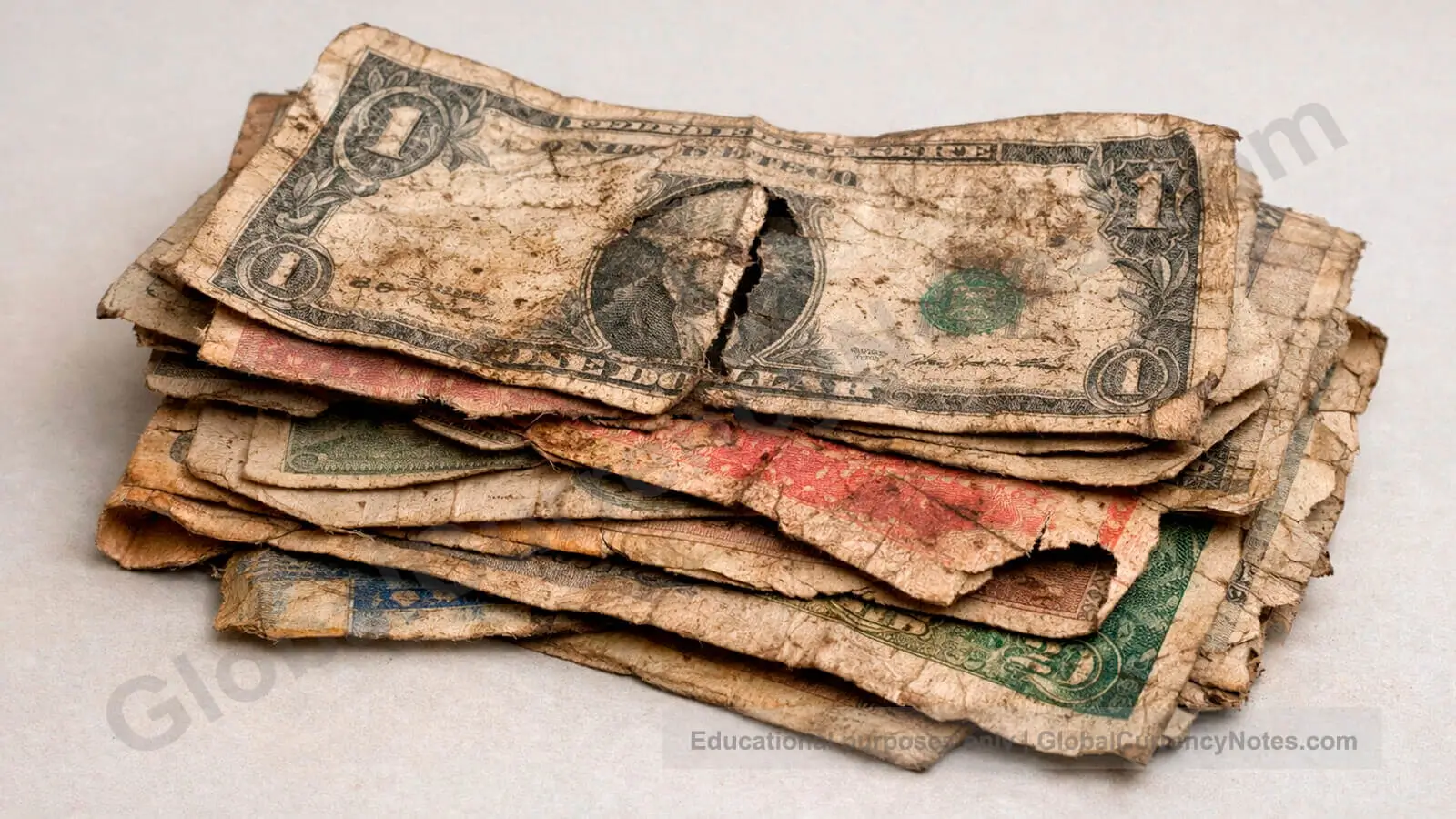
Common Causes of Banknote Damage
- Moisture and humidity: Can cause warping, mold growth, and ink bleeding in paper notes
- Direct sunlight: May fade inks and weaken paper fibers through UV exposure
- Physical stress: Repeated folding, bending, or crushing can create permanent creases and tears
- Oil and dirt: Skin oils, food residue, and environmental contaminants can cause staining and deterioration
- Improper storage materials: Certain plastics and adhesives may release chemicals that damage banknotes over time
For collectors, damage can significantly reduce value. For everyday users, damaged notes may be rejected by merchants or automated machines. Businesses handling large cash volumes may benefit from proper storage by potentially reducing replacement costs and processing issues.
Storage Environment: Temperature and Humidity
Environmental conditions can significantly affect banknote preservation. Paper currency is hygroscopic—it absorbs and releases moisture based on surrounding humidity. Maintaining relatively stable conditions can help prevent many common deterioration problems.
Generally Recommended Storage Conditions
- Temperature: Approximately 18-22°C (64-72°F) with minimal fluctuation
- Humidity: Approximately 45-55% relative humidity
- Location: Interior rooms away from windows, heating/cooling vents, and exterior walls
Stability generally matters more than hitting exact numbers. It’s advisable to avoid storing banknotes in attics (extreme temperature swings), basements (high humidity, potential flooding), garages (temperature extremes, vehicle exhaust), or near radiators and air conditioning units (temperature and humidity fluctuations).
Light Exposure
Ultraviolet light can cause irreversible damage to paper and inks. Store banknotes away from windows and avoid prolonged exposure to any light source when possible. If displaying notes, consider using UV-filtering glass or acrylic and limit display duration. For long-term storage, darkness typically provides the best protection.

Proper Handling Techniques
How you physically interact with banknotes can affect their condition. Simple handling habits can help prevent most accidental damage.
Basic Handling Rules
- Clean, dry hands: It’s recommended to wash and thoroughly dry hands before handling currency
- Handle by edges: When possible, touch only the margins, avoiding direct contact with printed areas
- Avoid excessive folding: Avoid folding notes unnecessarily; existing folds should not be pressed or ironed
- Support fully: When moving notes, try to keep them flat and supported to help prevent creasing
- Minimize handling: Reducing contact frequency can help limit oil transfer and wear risk
For Collectors and Valuable Notes
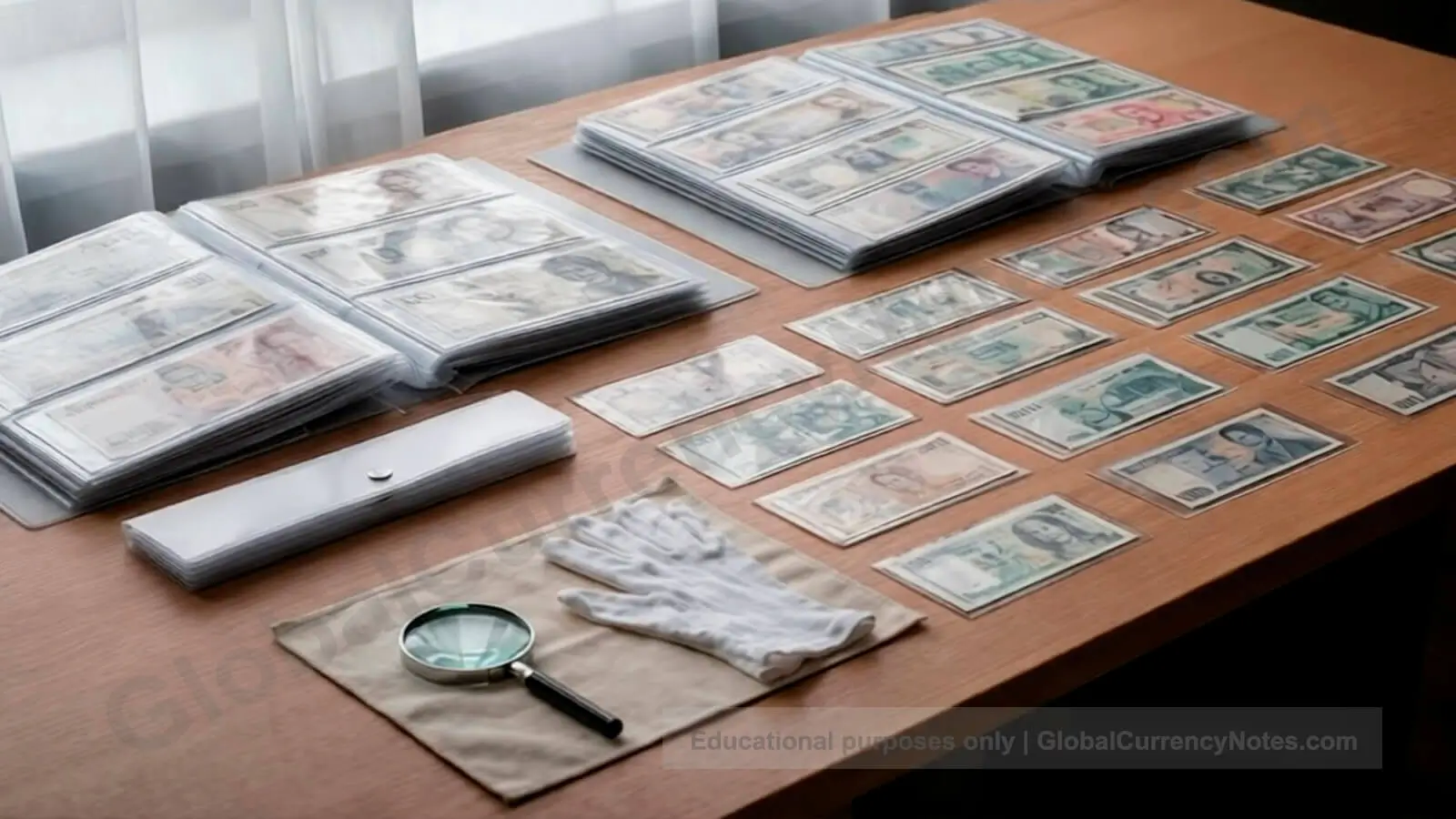
When handling collectible or high-value notes, consider using clean cotton gloves or nitrile gloves to eliminate oil transfer. Work over a clean, soft surface in case of drops. Consider using tools like plastic tweezers for inserting notes into protective sleeves rather than forcing fingers into tight spaces.
What to Avoid
- Eating, drinking, or smoking near banknotes
- Handling notes with lotions, creams, or oils on hands
- Snapping or flexing notes sharply (can cause micro-tears)
- Stacking unprotected notes without separators (friction can cause surface wear)
Storage Materials and Methods
Choosing appropriate storage materials can help protect banknotes from environmental damage and physical stress. Not all storage products are suitable for long-term currency preservation.
Safe Storage Materials
Currency sleeves: Use acid-free, archival-quality sleeves made from polyester (Mylar), polypropylene, or polyethylene. These materials are generally chemically stable and won’t typically release damaging compounds. Individual sleeves can help protect each note from dust, moisture, fingerprints, and physical contact with other notes.
Storage albums: Currency albums with clear pages allow organization and viewing while providing protection. Ensure album pages are explicitly labeled PVC-free and acid-free. Quality currency albums use inert plastics that typically won’t degrade or emit plasticizers over time.
Storage boxes: Archival-quality storage boxes made from acid-free cardboard or inert plastic can help protect sleeved notes from light and environmental exposure. Choose boxes sized appropriately to help prevent notes from shifting during handling.
Materials to Avoid
- PVC plastics: May release hydrochloric acid as they age, potentially severely damaging paper
- Regular cardboard or paper: Contains acids that can migrate to banknotes, potentially causing yellowing and embrittlement
- Rubber bands: Can degrade into sticky residue, cause creases, and contain sulfur compounds potentially harmful to paper
- Paper clips and staples: Can create pressure points, indentations, and potential rust stains
- Adhesive tape: May yellow, harden, and potentially damage paper permanently when removal is attempted
When purchasing storage supplies, look for products explicitly marketed as archival, acid-free, and PVC-free. While these may cost slightly more than ordinary supplies, they can help prevent damage that would be far more expensive to remedy or impossible to reverse.
Paper vs Polymer: Storage Differences
Storage requirements differ somewhat between traditional paper banknotes and modern polymer notes, though many principles apply to both.
Paper Banknotes
Paper notes are particularly sensitive to moisture, requiring careful humidity control. They tend to absorb environmental contaminants more readily and typically show creases more prominently. Paper notes generally benefit from protective sleeves and should be stored flat when possible to help prevent permanent folds.
Polymer Banknotes
Polymer notes generally resist moisture better than paper and typically prove more durable. However, they can develop permanent creases if folded sharply or compressed. Polymer surfaces may show fingerprints and scratches more visibly than paper. Store polymer notes flat and in protective sleeves to help prevent surface damage and creasing.
Both types generally benefit from stable temperature, appropriate humidity levels, darkness, and clean storage materials. The specific material doesn’t fundamentally change storage principles—proper handling and appropriate storage conditions apply universally.
Everyday Storage for Regular Users
Most people store everyday spending money in wallets or purses. While these aren’t archival storage, some practices can help reduce unnecessary wear on banknotes in daily use.
Wallet Storage Tips
- Avoid overstuffing wallets, which can crush notes and create permanent creases
- Store notes flat rather than folded when wallet design permits
- Separate denominations to help reduce friction and searching time
- Keep wallets away from moisture—don’t store in bathrooms or leave in pockets during laundry
- Periodically remove accumulated receipts and cards that compress currency
Home Storage for Non-Collectors
For money kept at home (emergency cash, foreign currency, etc.), simple protection can help extend usable life. Store notes flat in a drawer or small box in a climate-stable room. Keep them away from windows, heating sources, and potential water exposure. A simple envelope or plastic zip bag (not hermetically sealed) can provide basic protection from dust and casual damage.
Business and High-Volume Cash Handling
Organizations handling significant cash volumes—retailers, banks, cash-in-transit services—face unique storage challenges. Proper procedures may help reduce processing costs and reject rates while maintaining security.
Cash Handling Best Practices
- Count and sort on clean, dry surfaces
- Use currency straps or bands specifically designed for banknotes (avoid rubber bands)
- Store in fire-resistant safes with appropriate humidity control when possible
- Organize by denomination to help reduce handling time and errors
- Implement regular safe ventilation to help prevent humidity buildup
- Train staff on gentle handling techniques to help reduce damage rates
For businesses, damaged currency can represent real costs—notes may be rejected by banks or require special processing. Investing in proper storage and training staff on correct handling may help reduce these expenses while maintaining better relationships with banking partners.
When Banknotes Become Damaged
Despite careful storage, banknotes sometimes sustain damage through accidents or long circulation. Understanding when notes may remain usable and when they might require replacement can help prevent losses.
Acceptable Wear
Minor wear—slight discoloration, soft folds, minor soiling—doesn’t necessarily prevent notes from remaining in circulation. Merchants and banks typically accept lightly worn currency. Automated machines may be more selective, but human cashiers usually accept notes showing reasonable wear consistent with normal use.
Unacceptable Damage
Notes with the following issues are often rejected:
- Missing significant portions (policies vary but often require more than 50% to remain)
- Tears that separate the note into pieces
- Excessive soiling that obscures security features or denomination
- Deliberate defacement or writing that covers important elements
- Tape repairs (often considered altered currency)
Important: Central banks typically provide redemption services for damaged currency, but specific requirements vary significantly by country and institution. Policies regarding acceptable damage, required percentages remaining intact, and redemption procedures differ by jurisdiction. What may be accepted in one country might not be accepted in another. For guidance specific to your situation, contact your local central bank, commercial bank, or relevant monetary authority for their specific redemption policies and procedures.
Special Considerations for Collectors
Currency collectors typically have higher preservation standards since condition can directly affect collectible value. Professional grading services use precise condition scales where seemingly minor damage can significantly impact grades and market prices.
Collector Storage Priorities
- Individual archival sleeves for every note in the collection
- Climate-controlled storage environment when feasible
- Minimal handling—consider using gloves when necessary
- Professional-grade albums or storage boxes
- Security measures appropriate to collection value (safes, insurance, inventory records)
For valuable notes, consider professional grading and encapsulation services. These seal notes in tamper-evident holders that can provide excellent protection while establishing authenticated condition grades. Graded notes typically require less hands-on care while remaining well-protected.
Frequently Asked Questions
Can I store banknotes in regular plastic sleeves or bags?
It’s advisable to avoid PVC plastic sleeves—they may release damaging chemicals. Polyethylene bags (like basic food storage bags) are generally chemically inert but not ideal for long-term storage because they can trap moisture. For best results, use sleeves specifically designed for currency storage, made from archival-quality materials like Mylar, polypropylene, or acid-free polyethylene.
Is it safe to wash dirty banknotes?
Generally not recommended. Water and cleaning agents can damage both paper and polymer banknotes, potentially causing ink to run, paper to disintegrate, or polymer to deform. For paper notes, moisture can cause immediate damage. Polymer notes may withstand brief water exposure better but should not be intentionally washed. If notes become wet accidentally, allow them to air dry flat without applying heat.
How should I store foreign currency I’m keeping for future travel?
Consider storing foreign currency in individual currency sleeves or in an envelope inside a drawer in a climate-stable room. Keep different denominations separated for easy access. Avoid bathroom storage (humidity) or car storage (temperature extremes). For long-term storage between trips, consider a small archival storage box.
Can I iron banknotes to remove creases?
Not advisable. Ironing can scorch paper, melt polymer, and create unnatural sheen or brittleness. For paper notes, heat can brown the paper and weaken fibers. For polymer notes, heat can cause permanent deformation or melting. If creases concern you in a collectible note, consider consulting a professional conservator—amateur flattening attempts typically cause more damage than they solve.
What’s the best way to store banknotes I plan to give as gifts?
Consider placing notes in individual currency sleeves, then store flat in a protective greeting card or presentation folder. Keep in a drawer away from light and moisture until presenting the gift. This can help protect the notes while maintaining the presentation quality you want for gift-giving.
Do polymer banknotes require different storage than paper notes?
Storage principles remain largely the same—both generally benefit from stable temperature, appropriate humidity, darkness, and protection from physical damage. Polymer notes typically tolerate brief moisture exposure better but can develop permanent creases if folded sharply. Paper notes are generally more moisture-sensitive but may show creases less prominently. Both should ideally be stored flat in archival-quality sleeves when possible.
Disclaimer: Information provided is for educational purposes only and does not constitute professional advice. Banknote standards and regulations vary by jurisdiction and are subject to change. Readers should exercise their own judgment. For full legal disclosures and liability limitations, visit our Legal Notice.