Part of: Banknote Security | Banknote Types & Materials
Swiss franc banknotes are among the world’s most secure and technologically advanced currency notes, issued by the Swiss National Bank (SNB) and featuring distinctive vertical orientation along with sophisticated security elements designed to protect against counterfeiting.
Switzerland’s currency combines innovative design with practical functionality, offering users multiple verification methods that work without specialized equipment. The current ninth series of swiss franc banknotes represents significant advances in security while maintaining Switzerland’s commitment to quality and precision in currency production.
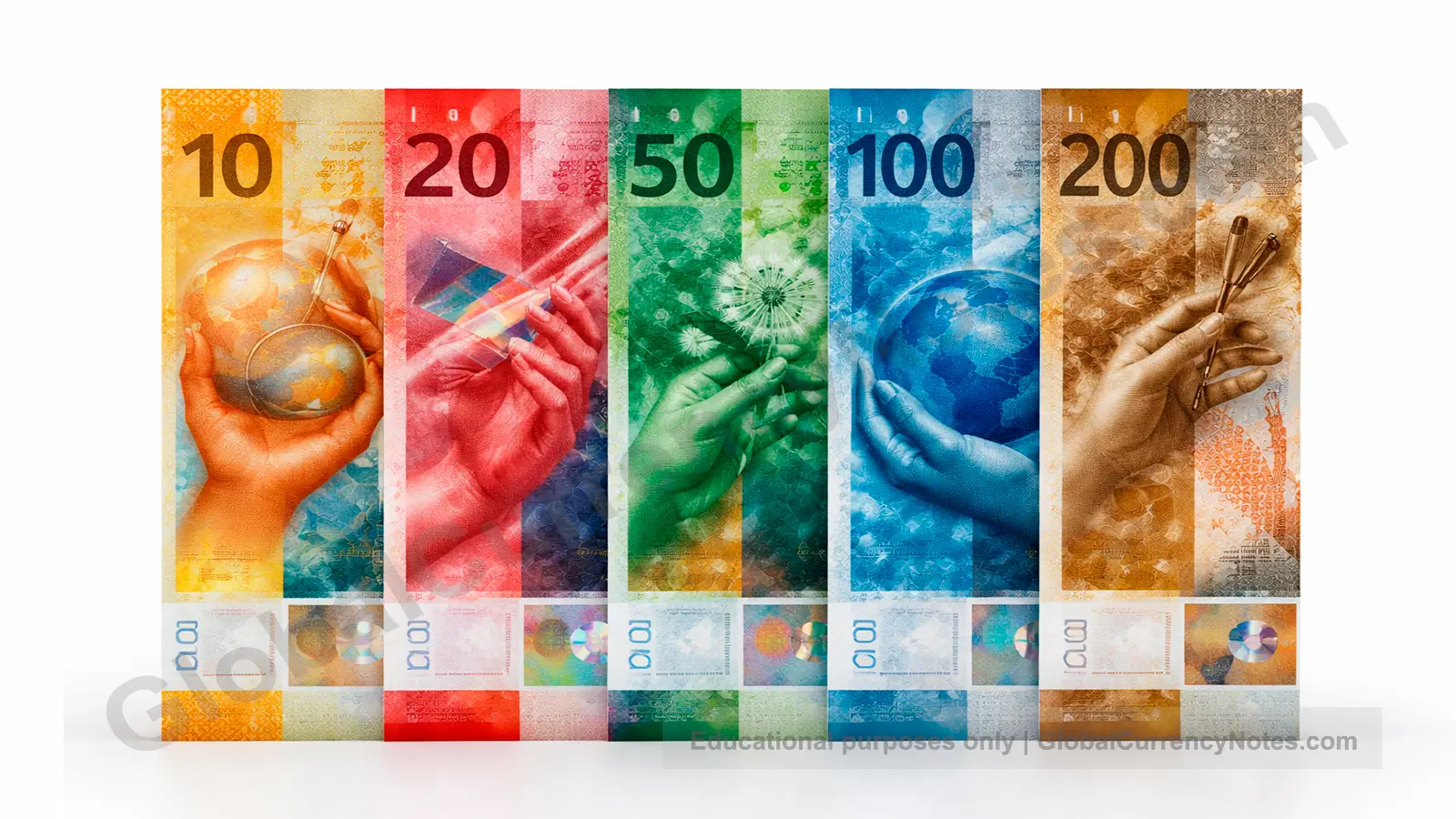
Overview of Swiss Franc Banknotes
The Swiss National Bank issues swiss franc banknotes in six denominations: 10, 20, 50, 100, 200, and 1,000 francs. According to SNB reporting on the ninth series, these banknotes began circulation in 2016 and feature a vertical format orientation—a design approach intended to enhance both security and usability while distinguishing Swiss currency from most other nations’ banknotes.
Each denomination of swiss franc banknotes uses a distinct color scheme and thematic design related to Switzerland’s contributions to global culture and science. The vertical orientation allows for improved incorporation of security features and provides better accessibility for users with visual impairments, according to design documentation published by the SNB.
Security Features of Swiss Franc Banknotes
Swiss franc banknotes incorporate multiple layers of security elements designed to make counterfeiting significantly more challenging while enabling straightforward verification by the public. These features combine visible, tactile, and dynamic elements that can be checked without specialized equipment.
Primary Security Elements
The notes include several key protective features according to SNB security documentation:
- Varnish elements: Raised varnish patterns visible from both sides that change appearance when tilted, creating dynamic visual effects difficult to reproduce
- Microperforations: Tiny holes forming numerical patterns visible when held to light, requiring precision manufacturing equipment
- Ultraviolet elements: Features visible only under UV light, including hidden patterns and security threads
- Kinegram stripe: A metallic security element displaying movement effects and multiple visual layers when the note is tilted
- See-through numeral: A numerical element printed on both sides that aligns perfectly when held to light
- Tactile elements: Raised printing detectable by touch, particularly useful for visually impaired users
These features work together to create multiple verification points for swiss franc banknotes. While no security system can provide absolute guarantees, the combination of elements is designed to present significant challenges to potential counterfeiters while remaining accessible to everyday users for basic authentication checks.
The Vertical Design of Swiss Franc Banknotes
Switzerland’s adoption of vertical orientation for its banknotes represents a notable design choice among major currencies. According to SNB announcements regarding the ninth series, this orientation was selected to enhance security feature integration and improve usability for certain user groups.
The vertical format of swiss franc banknotes allows for different arrangements of security elements and can make the notes easier to distinguish by size and color for users with visual limitations. This design approach also helps prevent confusion with other currencies in international contexts, as most major currencies use horizontal orientation.
While sometimes described as innovative in currency design, the vertical format serves primarily practical purposes related to security and accessibility according to official SNB documentation. The format allows for improved incorporation of dynamic security elements along the note’s length.

Swiss Franc Banknotes: Current Series and Denominations
The ninth series of swiss franc banknotes was introduced gradually according to the following schedule announced by the SNB:
- 50-franc note: April 2016 (first of the series)
- 20-franc note: May 2017
- 10-franc note: October 2017
- 200-franc note: August 2018
- 1,000-franc note: March 2019
- 100-franc note: September 2019 (completed the series)
Each denomination features distinct dimensions, colors, and thematic designs. The size differences between denominations are intended to assist with identification, particularly for users with visual impairments. All specifications and dimensions for swiss franc banknotes are published in official SNB documentation.
The 1,000-franc note represents one of the highest-value banknotes in regular circulation among major currencies. Its continued issuance reflects Switzerland’s economic context and payment preferences, though policies regarding high-denomination notes can evolve based on various factors including counterfeiting concerns and payment system developments.
How to Verify Swiss Franc Banknotes
The Swiss National Bank recommends a straightforward verification approach for swiss franc banknotes using the «tilt-look-feel» method. This process allows users to check authenticity without specialized equipment:
Tilt Method
When tilting a genuine Swiss franc note, several elements should display changing visual effects. The varnish elements shift in appearance, the kinegram stripe shows movement, and color-shifting effects become visible. These dynamic features are designed to be difficult to reproduce with common printing methods.
Look Method
Holding the note to light reveals several verification features. The see-through numeral should align perfectly from both sides, microperforations form clear patterns, and the security thread becomes visible. The overall print quality should appear sharp and detailed under close examination.
Feel Method
Genuine swiss franc banknotes have distinctive tactile characteristics. Raised printing elements can be felt by running fingers across the note’s surface, particularly in designated tactile areas. The paper itself has specific texture properties according to SNB specifications, though exact substrate composition details are not publicly disclosed for security reasons.
While these methods can help identify many common counterfeits, they do not guarantee detection of all sophisticated forgeries. Users who suspect a counterfeit note should contact their bank or local authorities rather than attempting definitive authentication themselves.

Counterfeiting and Protection of Swiss Franc Banknotes
According to SNB reporting, counterfeiting levels for swiss franc banknotes have generally remained at relatively low levels compared to the total volume in circulation. The bank publishes periodic statistics on detected counterfeits, though these figures represent only counterfeit notes that were identified and reported.
The security features incorporated into swiss franc banknotes are designed to deter counterfeiting by making reproduction technically challenging and economically unviable for most potential counterfeiters. However, counterfeiting methods continue to evolve, and no security system can provide complete protection.
The SNB works with law enforcement, financial institutions, and international partners to monitor counterfeiting trends and adjust security measures as needed. Future series may incorporate additional or modified security features based on emerging threats and technological capabilities.
Frequently Asked Questions About Swiss Franc Banknotes
Why are Swiss franc banknotes vertical?
According to SNB documentation, the vertical orientation of swiss franc banknotes was chosen to enhance security feature integration and improve usability for users with visual impairments. The format allows for different arrangements of protective elements and helps distinguish Swiss currency from other nations’ banknotes.
What is the largest Swiss franc banknote?
The 1,000-franc note is the highest denomination currently issued by the Swiss National Bank. It represents one of the highest-value banknotes in regular circulation among major world currencies, reflecting Switzerland’s economic context and payment system preferences.
How can I tell if Swiss franc banknotes are genuine?
The SNB recommends using the «tilt-look-feel» method for swiss franc banknotes: tilt the note to see changing visual effects, hold it to light to check see-through features and microperforations, and feel for raised printing elements. These checks can help identify many counterfeits, though professional verification may be needed for suspicious notes.
Are old Swiss franc banknotes still valid?
Previous series swiss franc banknotes typically remain legal tender for a specified period after a new series is introduced, according to SNB policy. However, redemption policies and timeframes can vary. The SNB publishes current information about which series remain valid and redemption procedures for older notes on their official website.
What materials are Swiss franc banknotes made from?
Swiss franc banknotes are produced using specialized substrate materials selected for durability and security. Specific composition details are not publicly disclosed for security reasons, but the SNB has indicated that the materials are chosen to support the incorporation of security features while ensuring reasonable lifespan in circulation.
Can I exchange damaged Swiss franc banknotes?
The Swiss National Bank has policies for exchanging damaged swiss franc banknotes, with conditions typically depending on the extent of damage and what portion of the note remains. Specific requirements and procedures are detailed in SNB guidelines. Users should contact the SNB or their bank for current exchange policies.
Do Swiss franc banknotes contain any accessibility features?
Yes, according to SNB documentation, swiss franc banknotes include several features intended to assist users with visual impairments: varying sizes by denomination, strong color differentiation, tactile elements in the form of raised printing, and the vertical format which can aid in identification. These features are designed to make the currency more accessible to all users.
Disclaimer: Information provided is for educational purposes only and does not constitute professional advice. Banknote standards and regulations vary by jurisdiction and are subject to change. Readers should exercise their own judgment. For full legal disclosures and liability limitations, visit our Legal Notice.